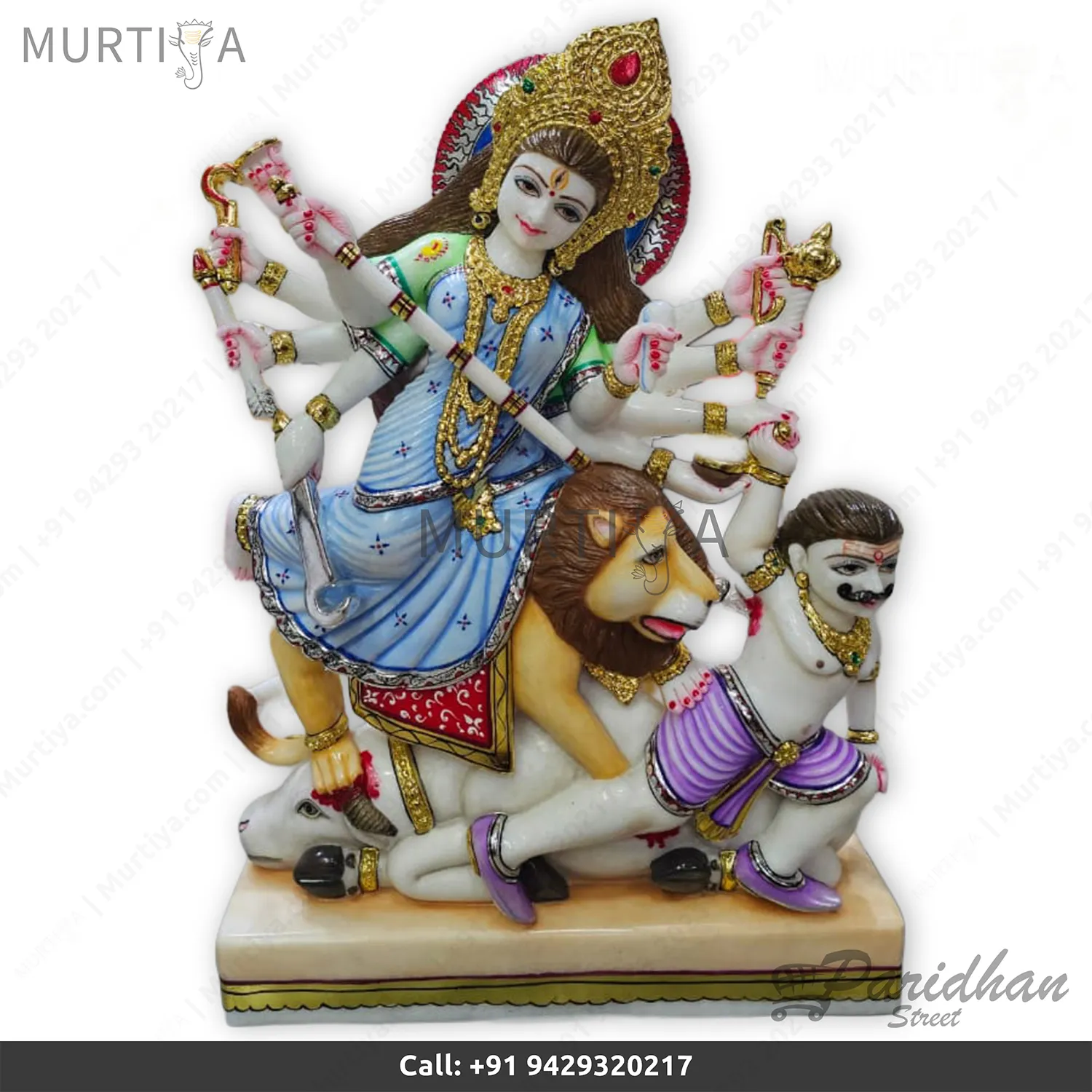
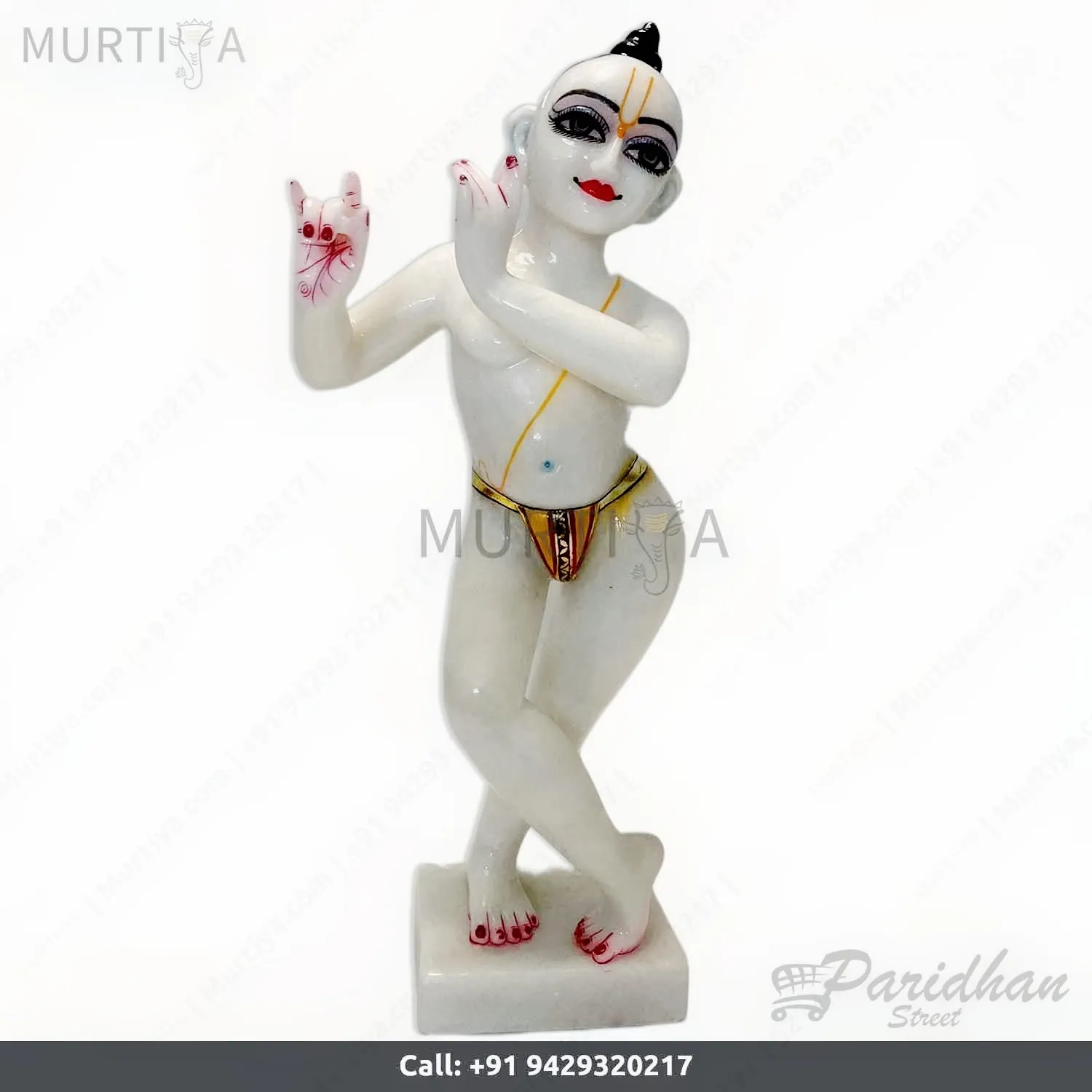
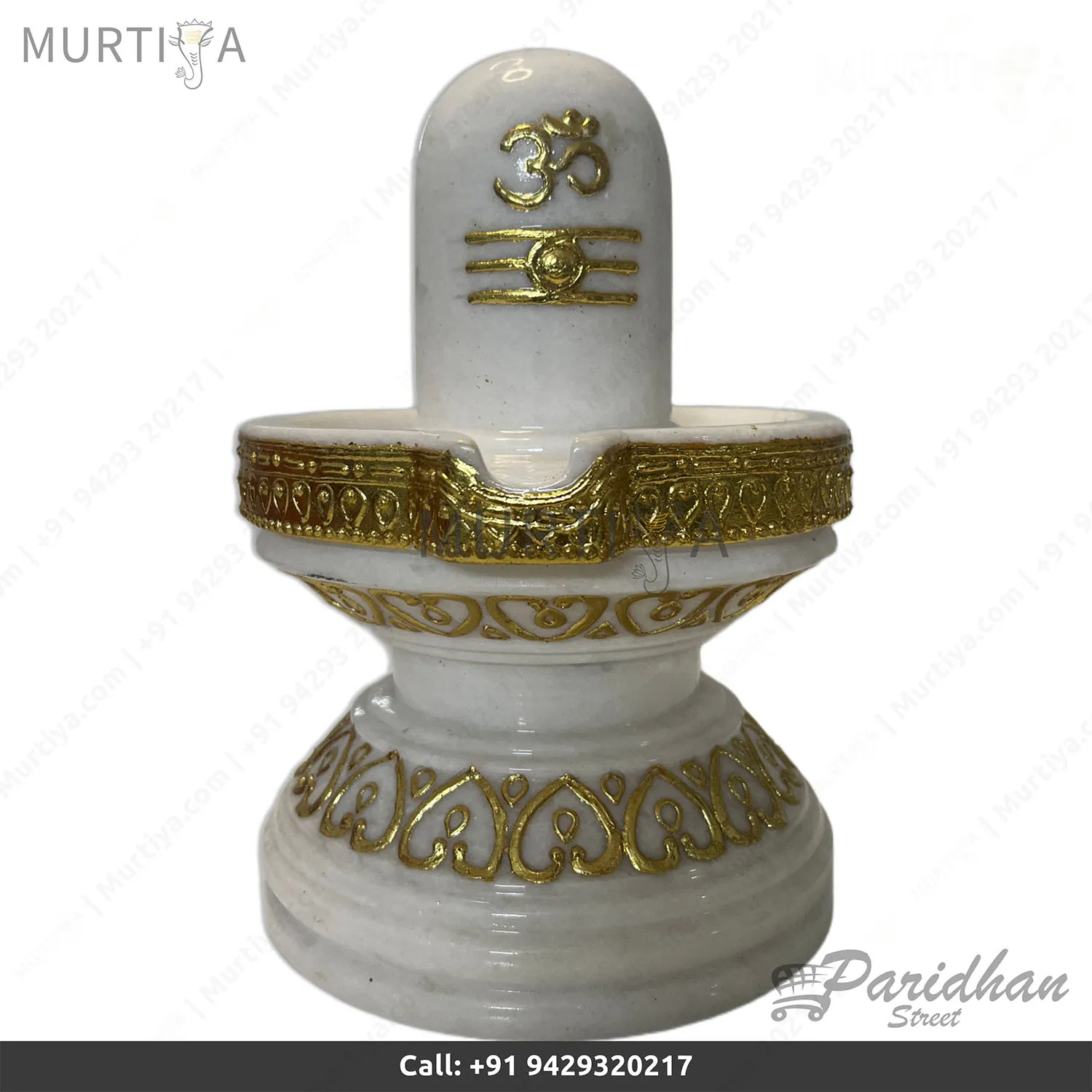
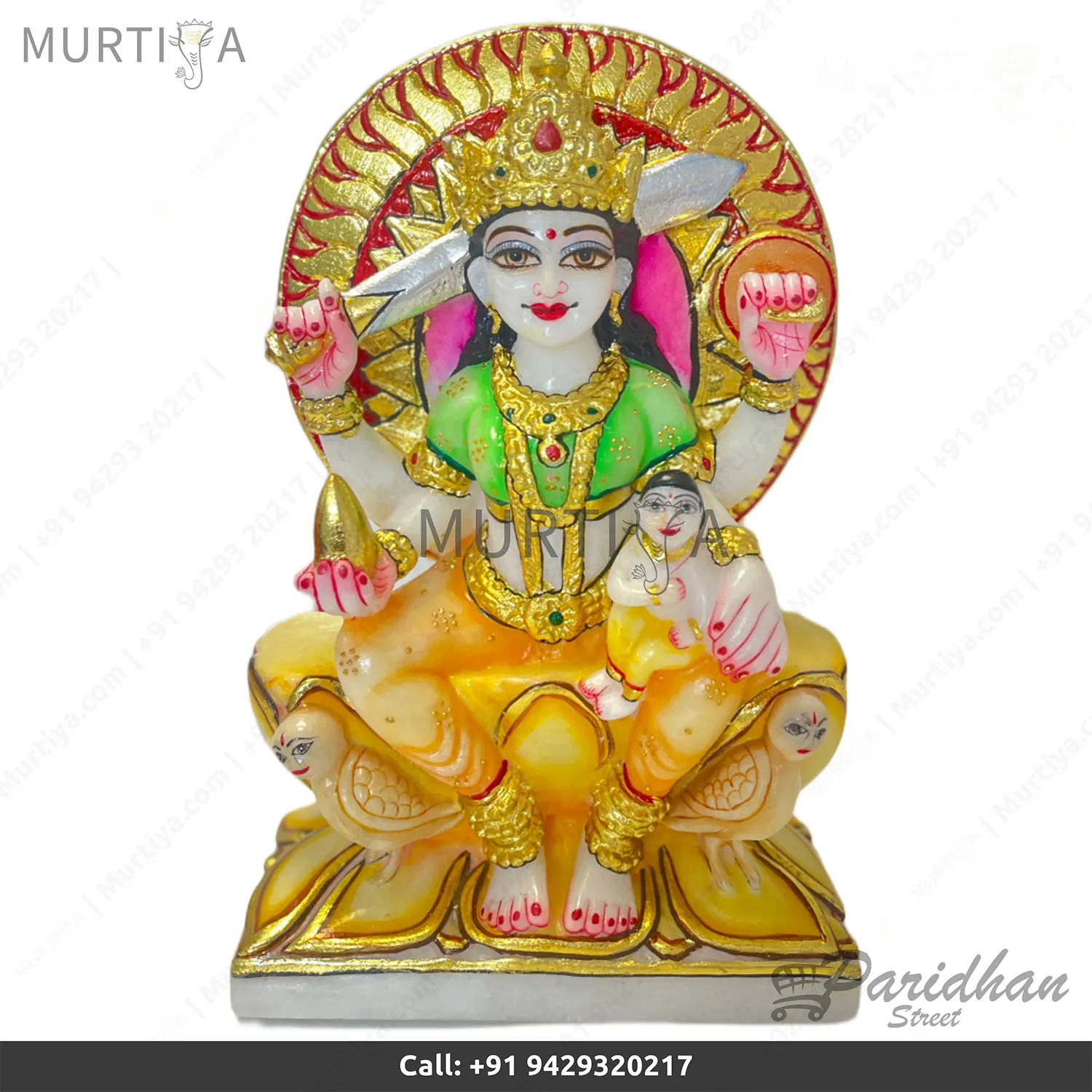
Lighting a marble murti is mostly about direction and heat, not brightness.
Light from the front, not the top
Front and side light rakes across carved detail and creates shadow, which is what makes carving readable. A spotlight directly above flattens detail and adds heat.
Use warm, diffused light
Warm white (around 2700–3000K) suits marble and devotion alike. Diffused sources avoid harsh hotspots and glare on polished surfaces.
Manage heat
Prolonged heat dries the surface and can dull the polish. Prefer LED sources mounted at a distance rather than close halogen or filament lamps. Diyas and oil lamps should sit in front of the deity on a separate, heat-safe tray — not directly beneath the murti.
Avoid soot
Oil lamps deposit soot, which settles into ornament recesses. Choose a stable wick and keep the lamp slightly forward and lower than the deity so soot rises away from the stone.
Convenience
Warm, dimmable lighting on a switch or timer supports daily practice. Lighting the shrine should be easy, not a chore.
Frequently asked questions
What kind of light is best for a marble murti?
Warm, diffused LED light from the front or sides. Directional front light makes carved detail read clearly.
Can lamps damage a marble murti?
Prolonged heat can dry and dull the surface. Keep lamps at a distance and place diyas in front of and below the deity, not directly beneath it.
How do I stop soot from oil lamps settling on the murti?
Use a stable wick and position the lamp forward and lower than the deity so soot rises away from the stone.
Where to go next