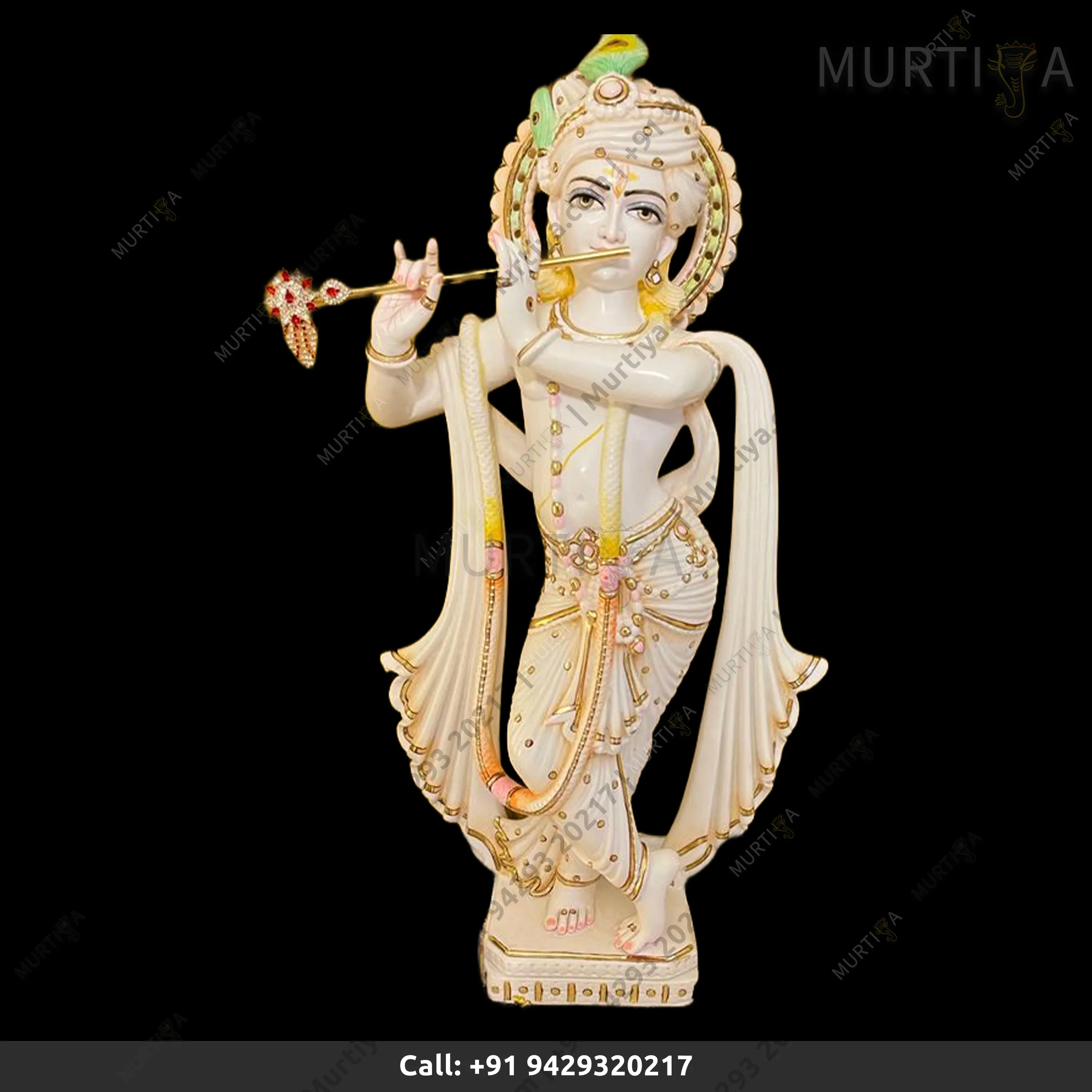
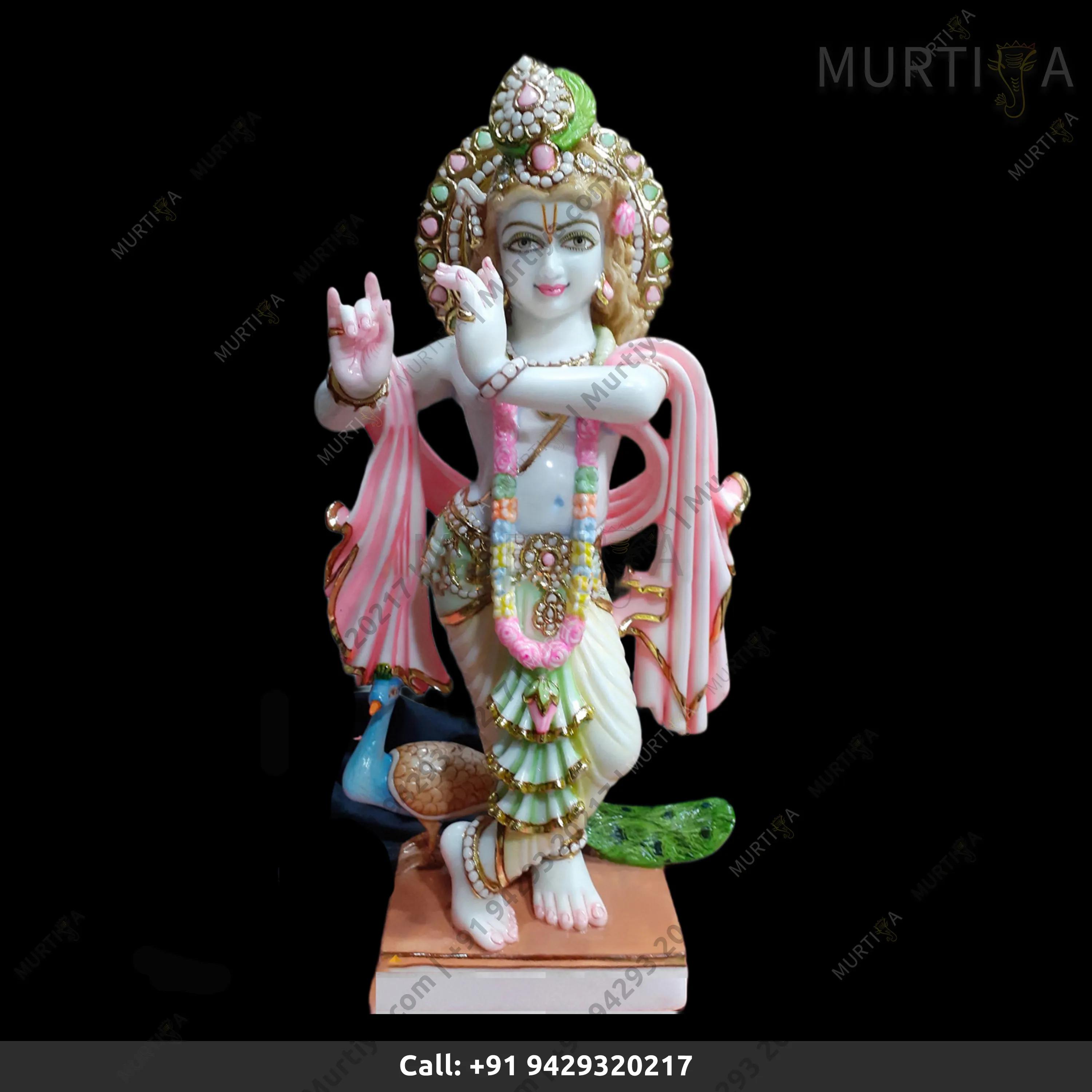
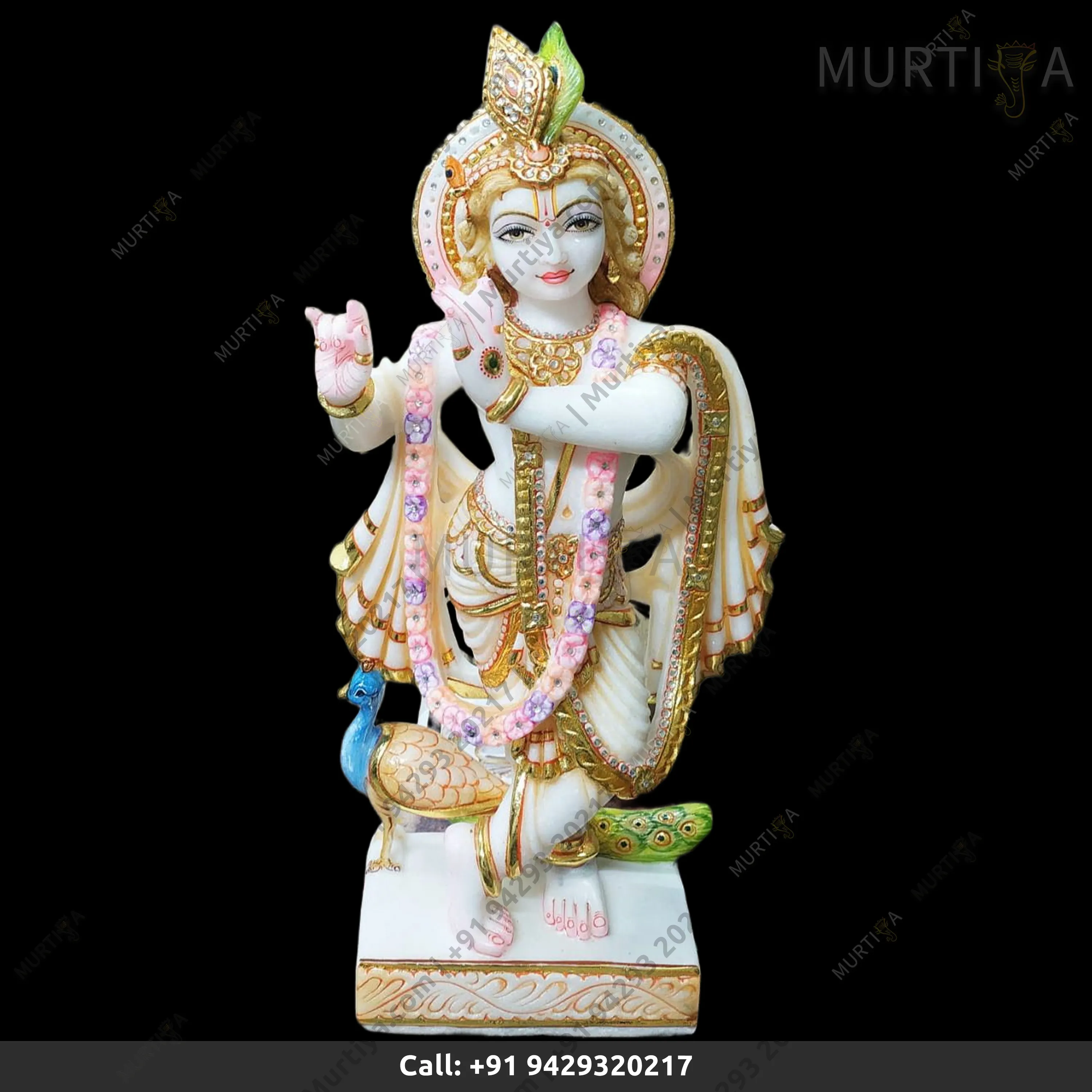
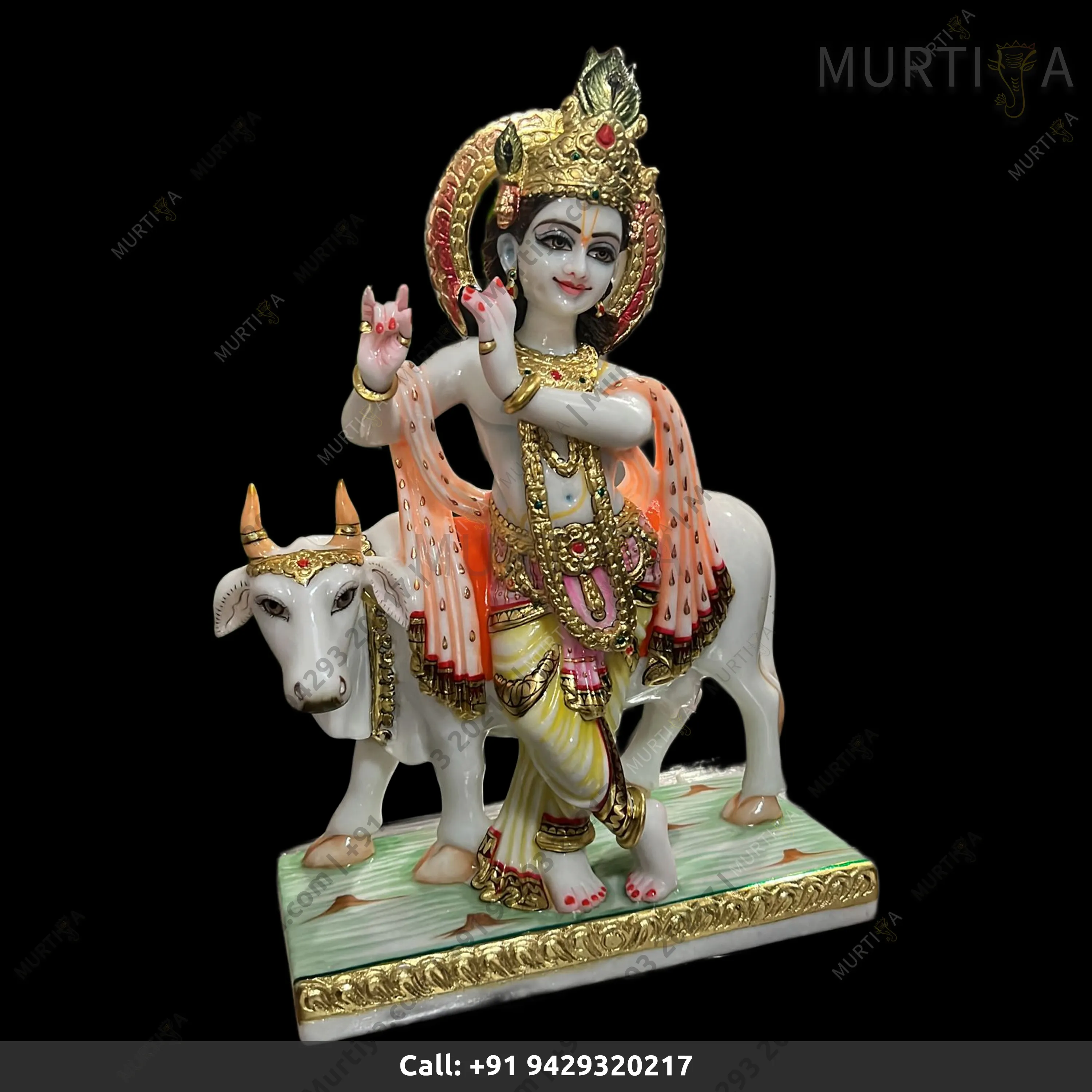
The pose you choose determines the mood of the whole shrine, and each form has different structural and dressing implications.
Murli Manohar (flute)
The most recognisable single Krishna. Lively and devotional, it works well in home shrines and as the central figure of a temple altar. The flute is carved from the main block where the pose allows.
Tribhanga (three-bend)
A graceful, curved stance that shows the figure at an angle. It is beautiful but structurally more demanding at large sizes, since weight shifts away from the centre line.
Seated forms
Seated Krishna reads calm and formal and suits smaller shrines. It is also the most stable form for large statues and for dressing with heavy jewellery.
Child Krishna
Laddu Gopal is a separate devotional tradition — worshipped as a child, dressed and fed daily. It is not interchangeable with adult Krishna forms.
Choosing
Home shrine, lively mood → Murli Manohar.
Formal or large-scale installation → seated.
Graceful centrepiece, medium size → tribhanga.
Daily dressing and play → Laddu Gopal.
Frequently asked questions
Which Krishna pose is most common?
Murli Manohar with the flute is the most recognisable and most widely used single form for home shrines and temple altars.
Is tribhanga suitable for a large statue?
It is more structurally demanding at large sizes because the weight shifts off the centre line. Seated forms are safer at scale.
Is Laddu Gopal the same as Krishna?
Laddu Gopal is child Krishna and is worshipped as a child with its own daily routine. It is a distinct devotional tradition.
Where to go next