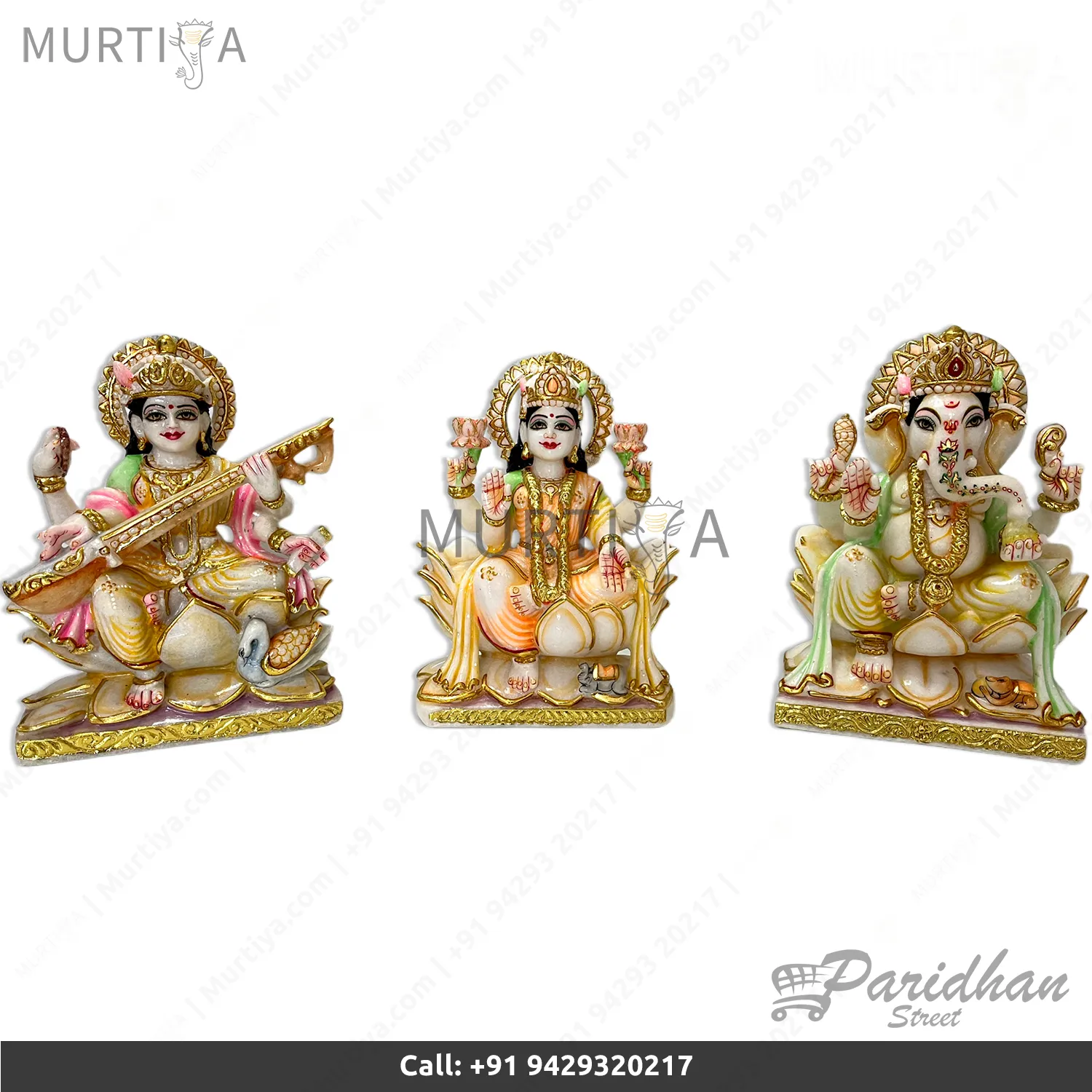
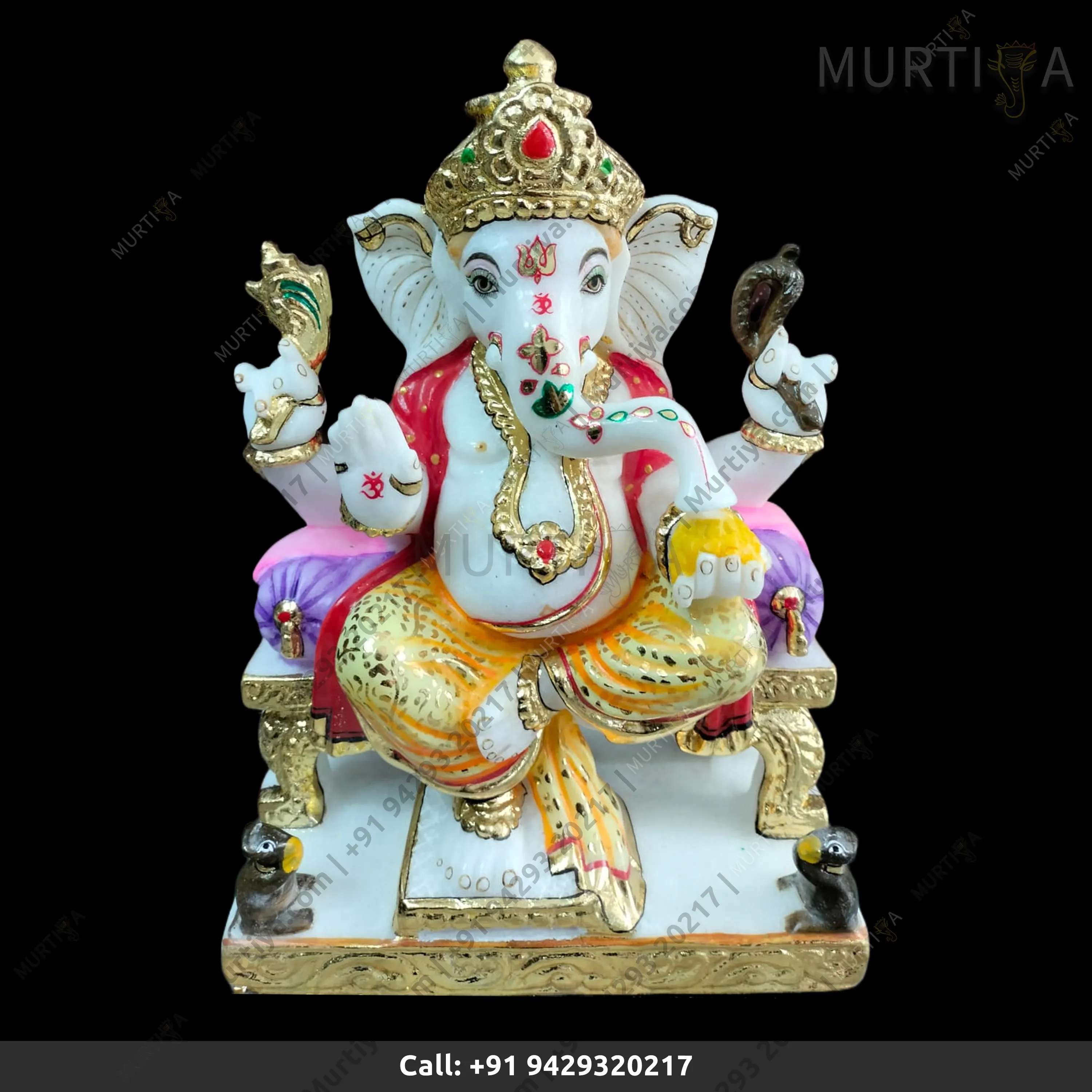
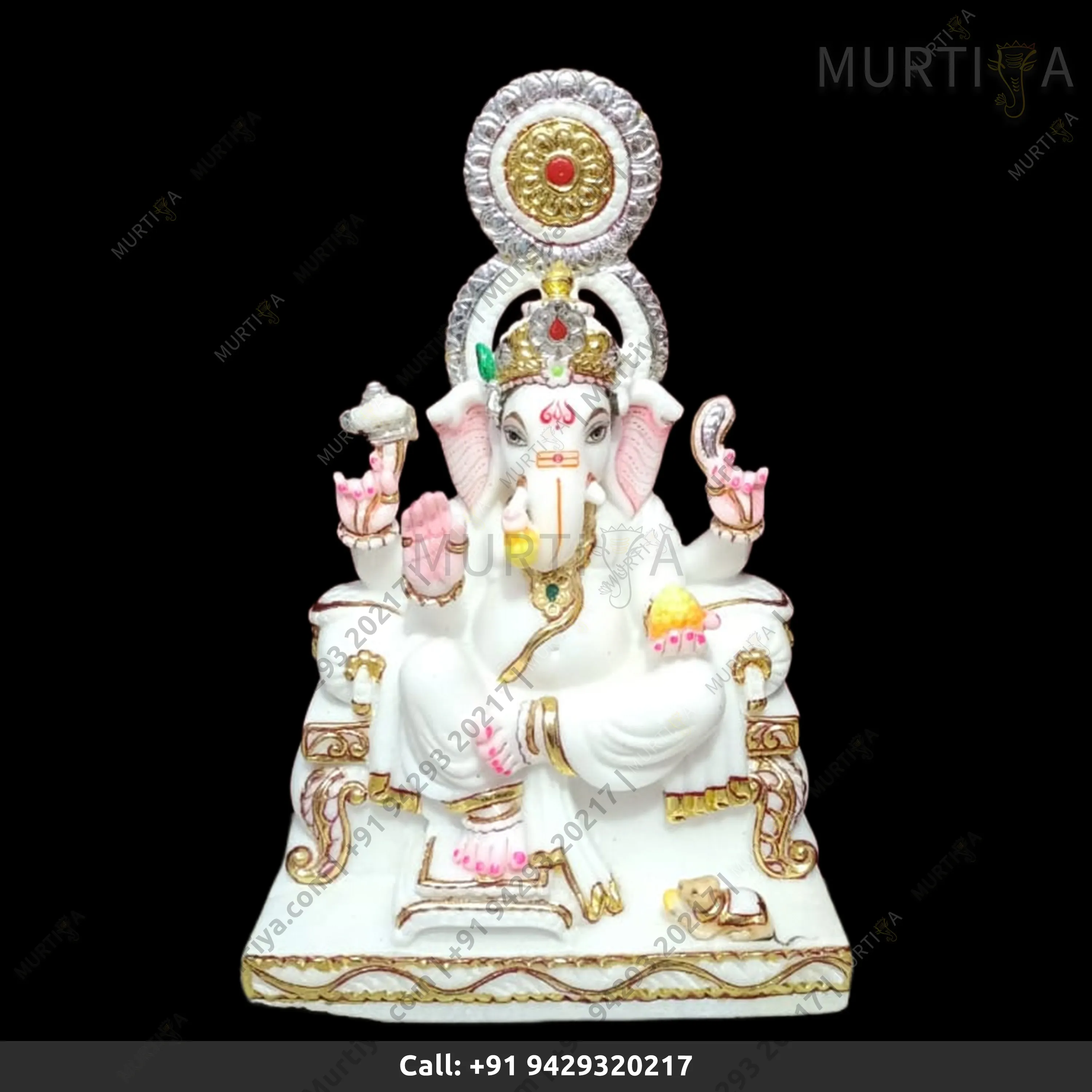
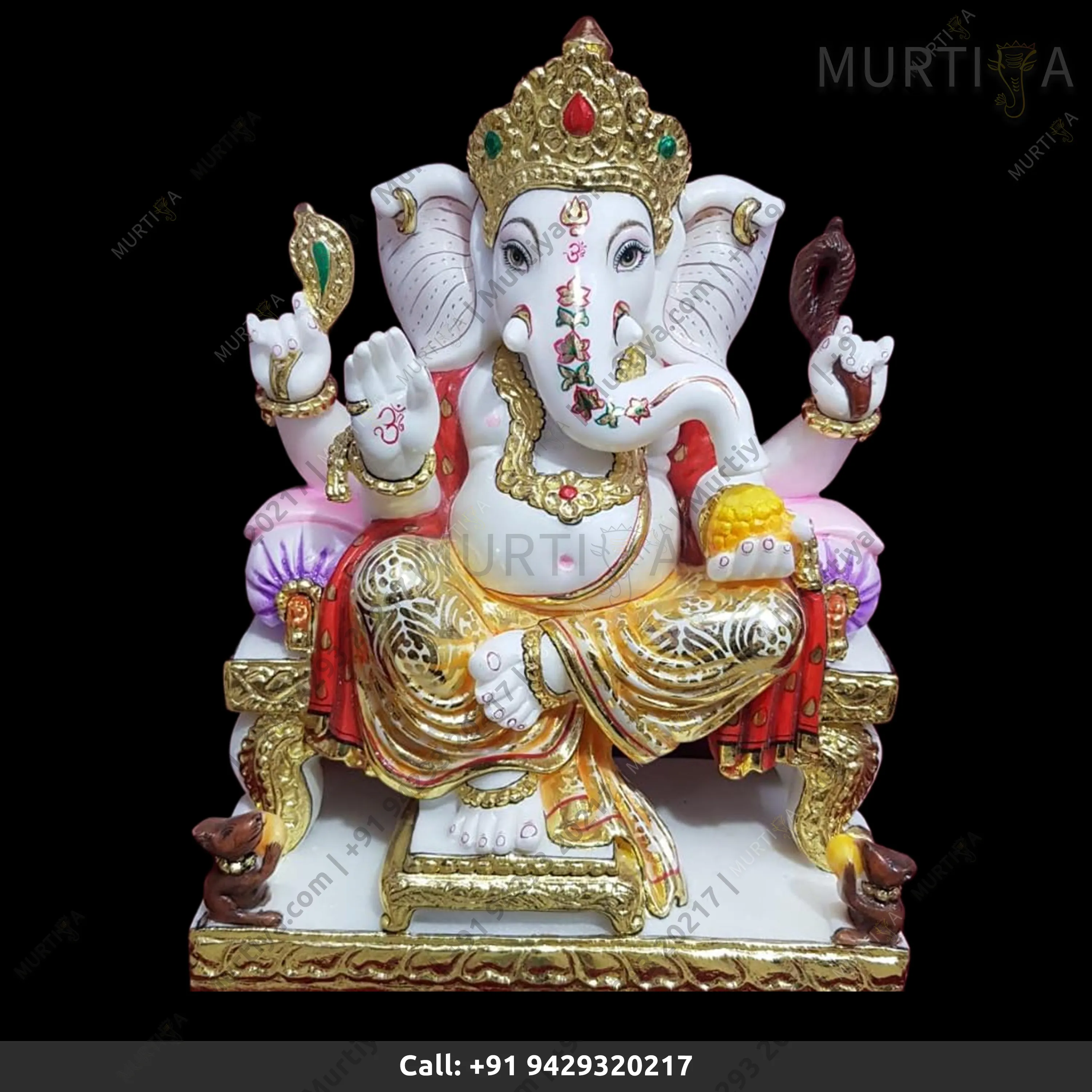
The trunk direction is one of the few Ganesh details with a clear traditional interpretation, and it is worth understanding before you order.
Trunk curving to the left
This is the most common form for home worship, associated with the moon and with gentle, accessible grace. It is the safest and most widely appropriate choice for a family shrine.
Trunk curving to the right
The right-curling trunk is associated with a more austere, solar aspect and with stricter worship. Traditionally it was installed in temples rather than homes, and it requires more consistent daily practice. Some traditions consider it unsuitable for casual domestic worship.
Upward-curling trunk
An upward trunk is associated with the awakened state and is comparatively rare. It is usually a deliberate choice made with a teacher's guidance.
Practical guidance
Home mandir, first murti → trunk to the left.
Temple or institutional sanctum → trunk to the right is traditional.
Not sure → choose trunk-left and ask your family tradition if in doubt.
Whichever you choose, the iconography should be internally consistent — trunk direction, seated posture and the objects held should belong to the same form.
Frequently asked questions
Which trunk direction is best for a home?
A trunk curling to the left is the standard and safest choice for home worship. Right-curling forms are traditionally temple-focused.
Can I keep a right-trunk Ganesh at home?
Some traditions advise against it unless you maintain consistent daily worship. If unsure, consult your family tradition or local priest.
What does an upward trunk mean?
It is associated with the awakened state and is uncommon. It is usually chosen with specific guidance rather than casually.
Where to go next