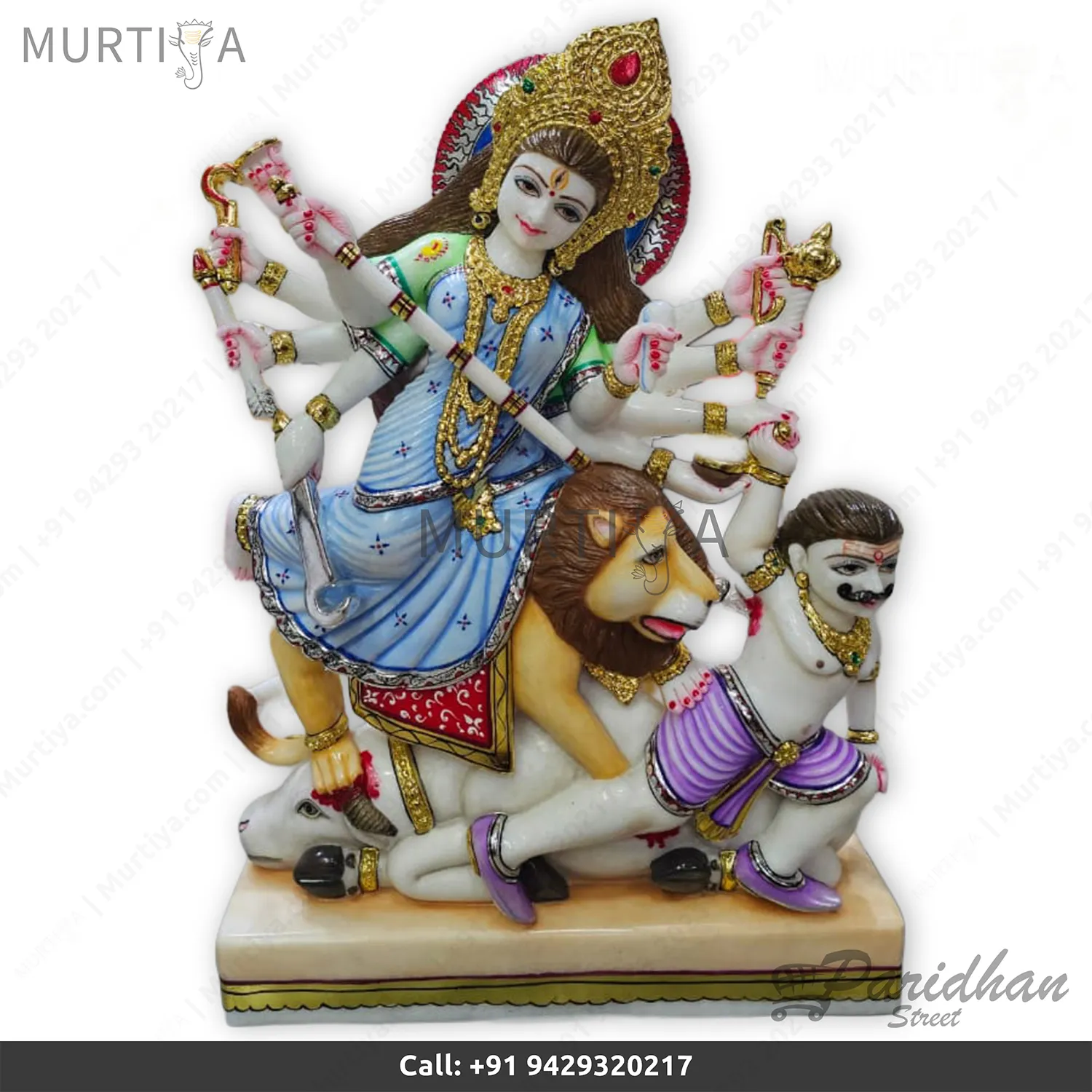
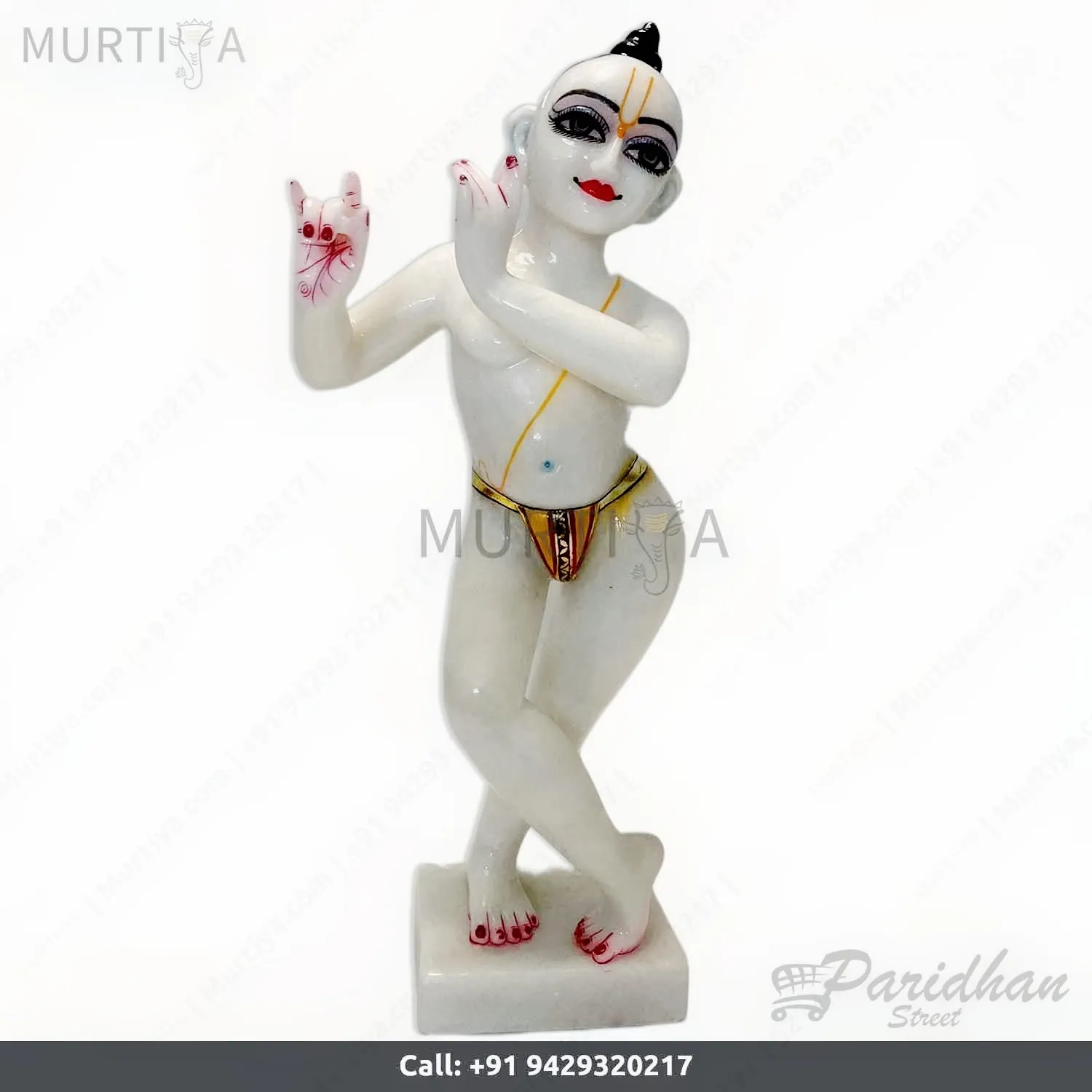
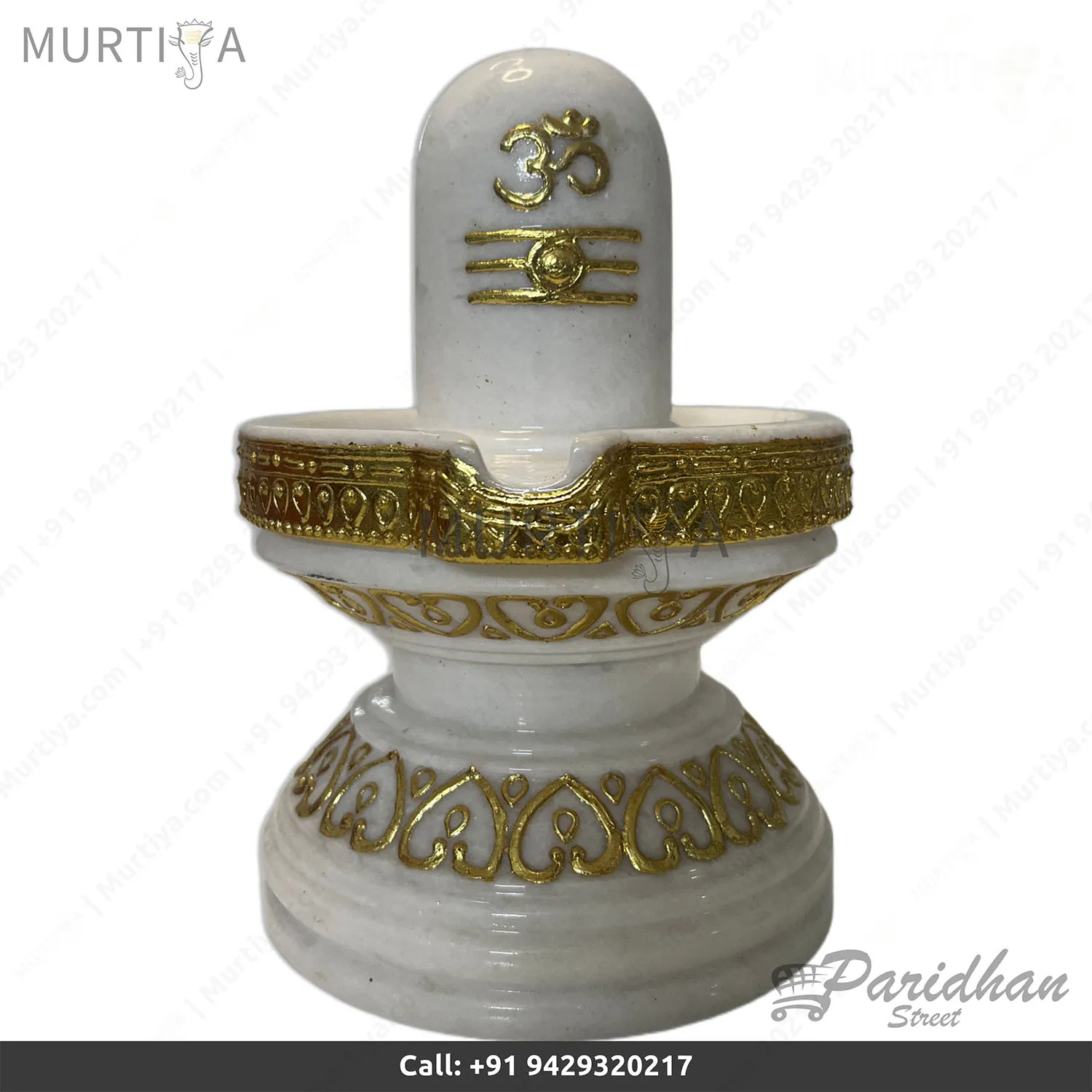
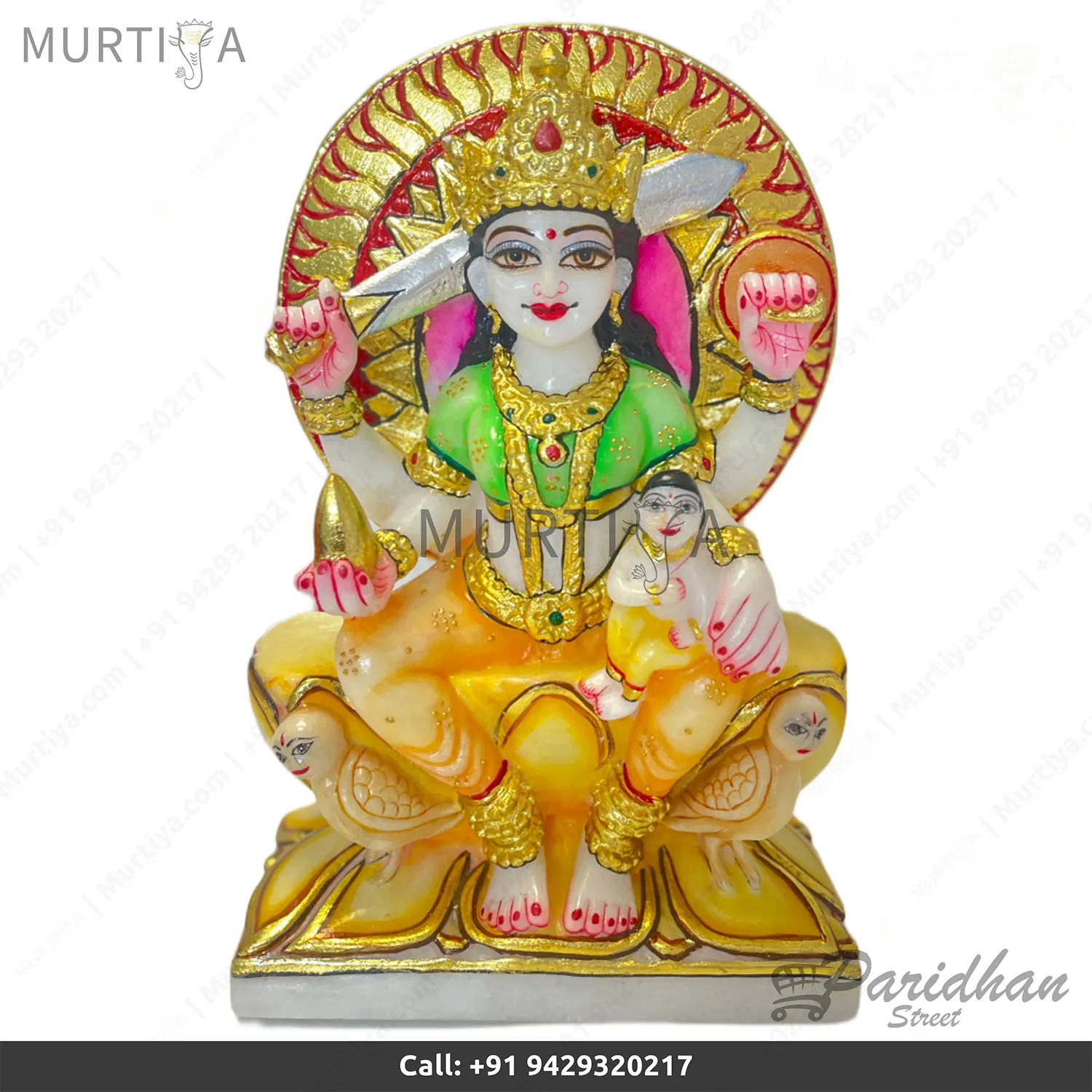
A shrine with several deities works when there is a clear hierarchy. Without one, it reads as a crowded shelf.
Establish one focal deity
Pick the primary deity and make it the tallest and most central figure. Everything else supports it.
Use stepped heights
Vary heights deliberately. A common arrangement is the main deity tallest at the centre or rear, with companion figures lower and slightly forward.
Respect traditional order
Ganesh is typically placed to the left of the main deity and slightly lower. Consorts sit beside their deity. Ask within your tradition for specific pairings.
Spacing
Leave enough room between figures to dust and dress each one individually. Idols touching each other trap moisture and dust and are hard to dress.
Materials and finishes
Mixed materials are fine, but group similar heights and finishes so the shrine looks composed. Keep the main deity in the most durable material if it is handled daily.
Rotate festival idols
Rather than crowding the main shrine permanently, keep festival idols in a second, smaller arrangement and bring them out as needed.
Frequently asked questions
Can I keep several idols in a small mandir?
Yes, if you keep one focal deity and step the heights. Crowding happens when all figures are the same size and equally prominent.
Where should Ganesh be placed among other idols?
Traditionally Ganesh is placed to the left of the main deity and slightly lower. Specific arrangements vary by family tradition.
Should idols touch each other in a shrine?
No. Leave space between figures so you can dust and dress each one, and to avoid trapped moisture.
Where to go next