Most Ganesh murti purchases go wrong on one of five decisions. Work through them in order and the choice becomes straightforward.
1. Measure the space first
Measure the mandir niche height, then subtract the crown height and at least two inches of clearance for dressing. The remaining number is your maximum murti height. Buying by "looks about right" is the most common cause of returns.
2. Decide the pose
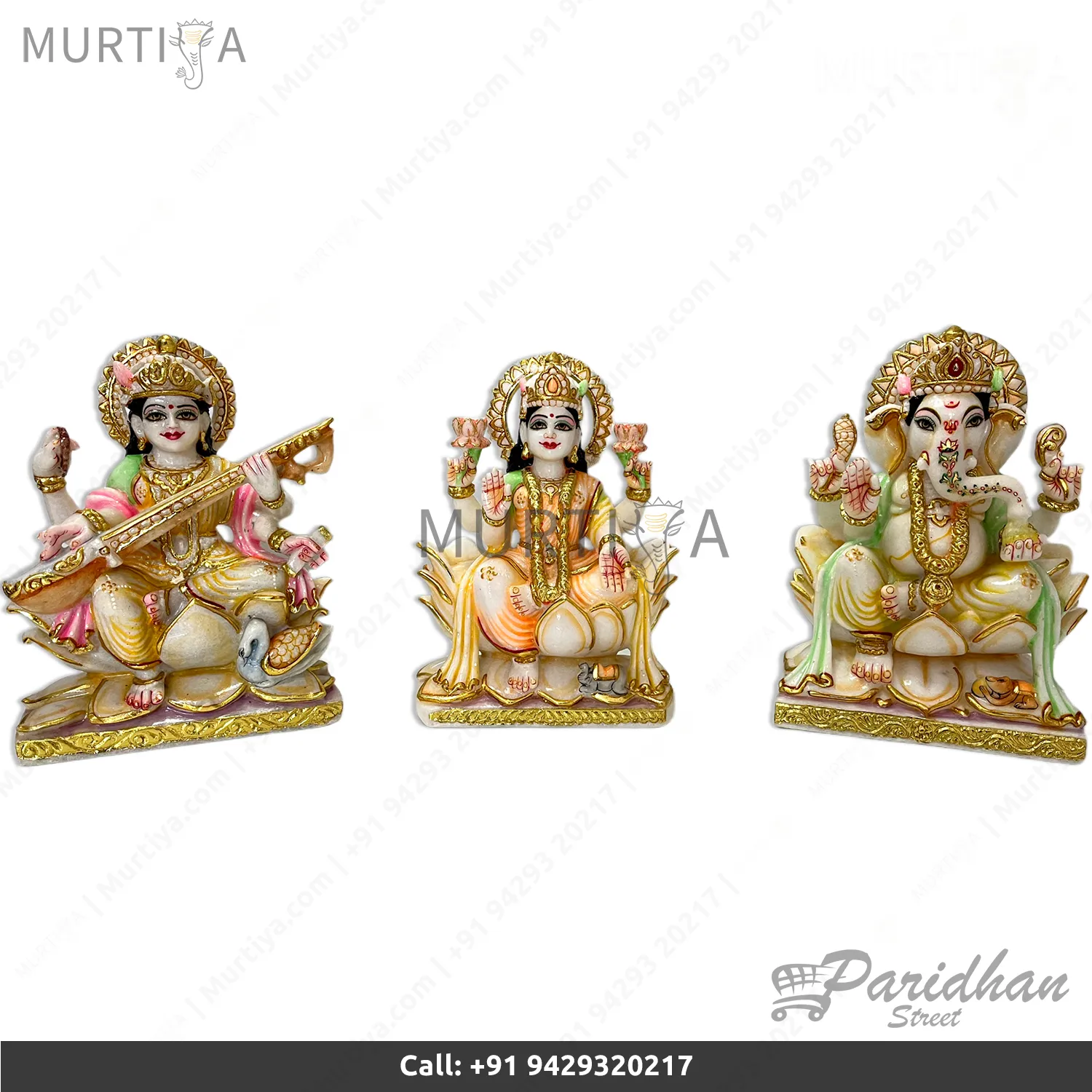
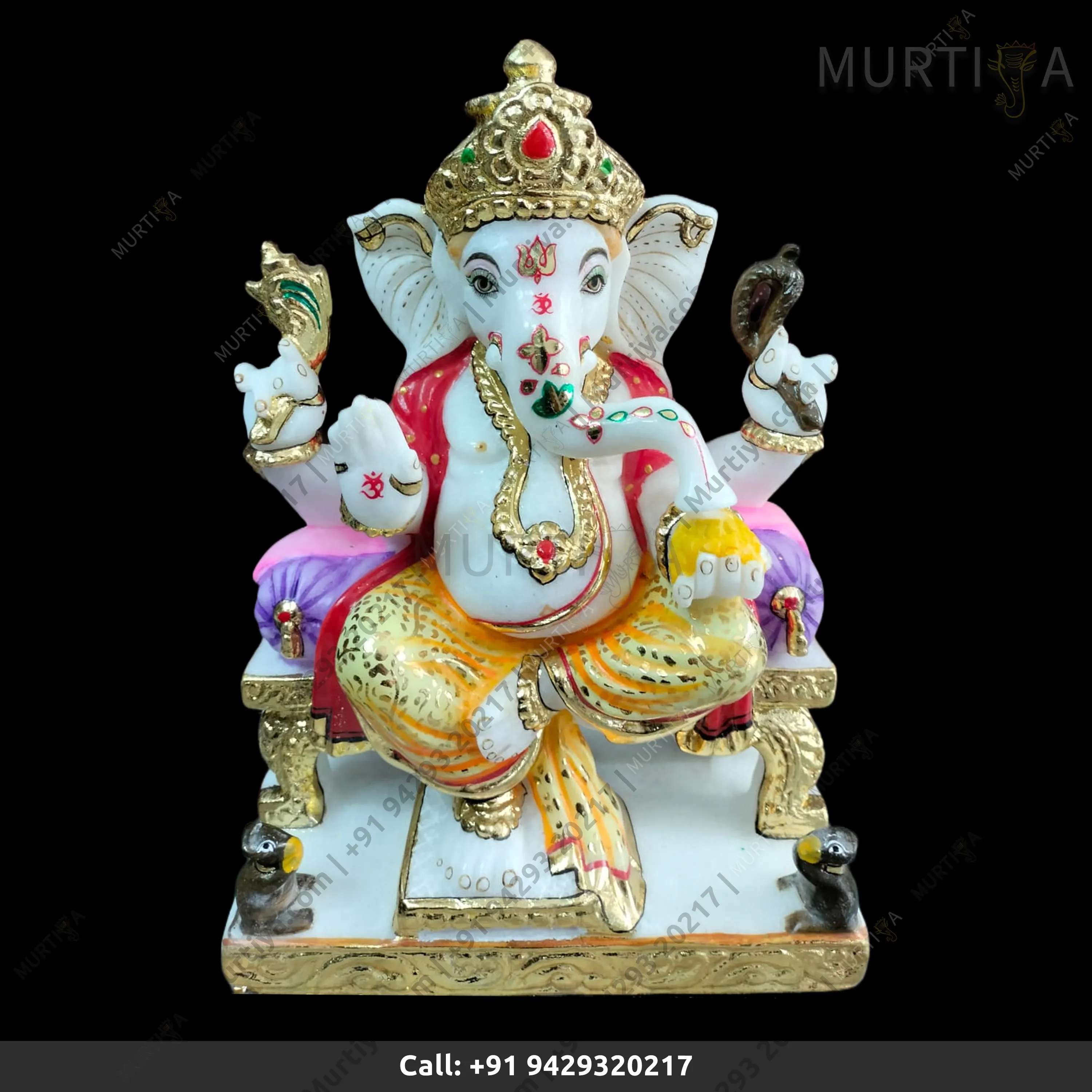
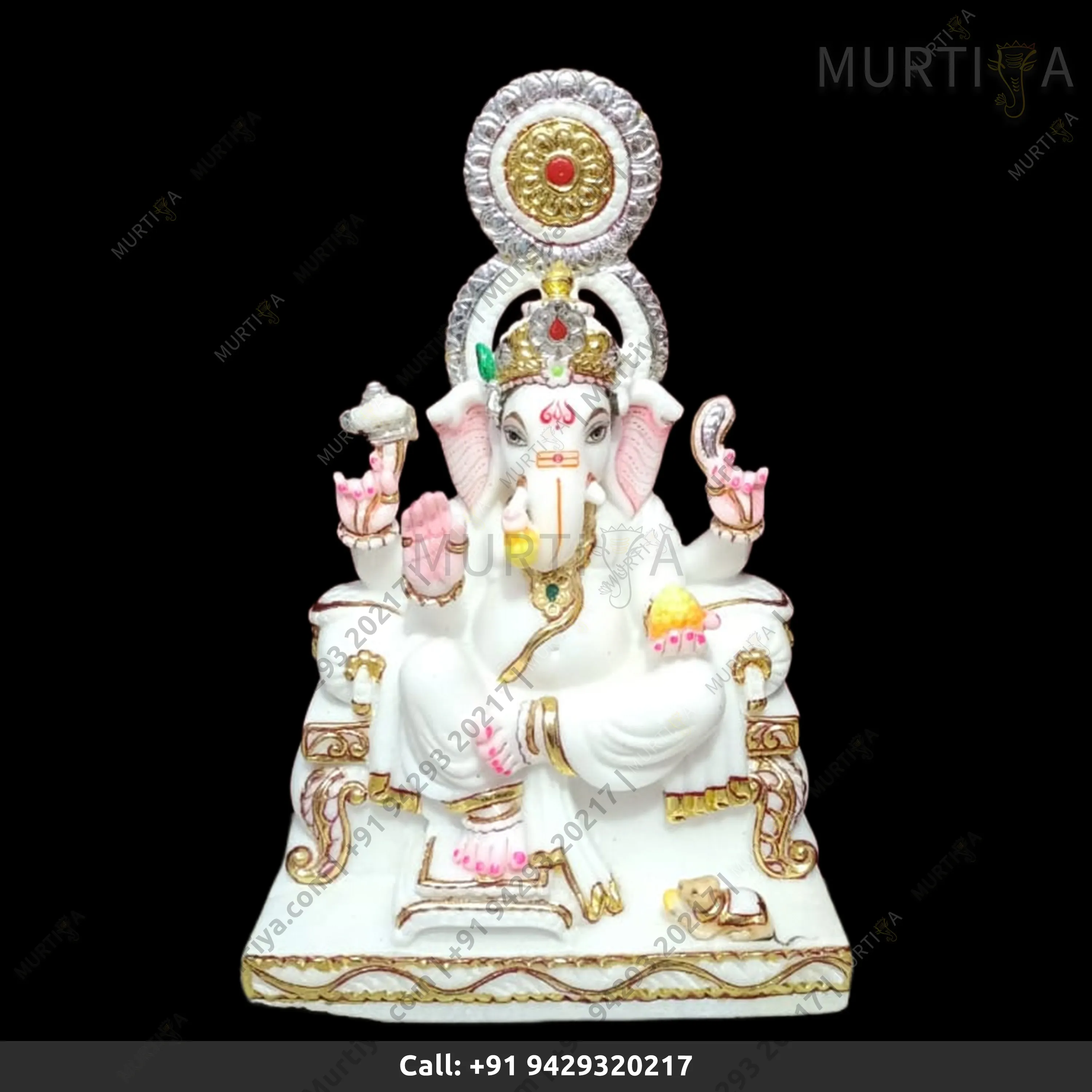
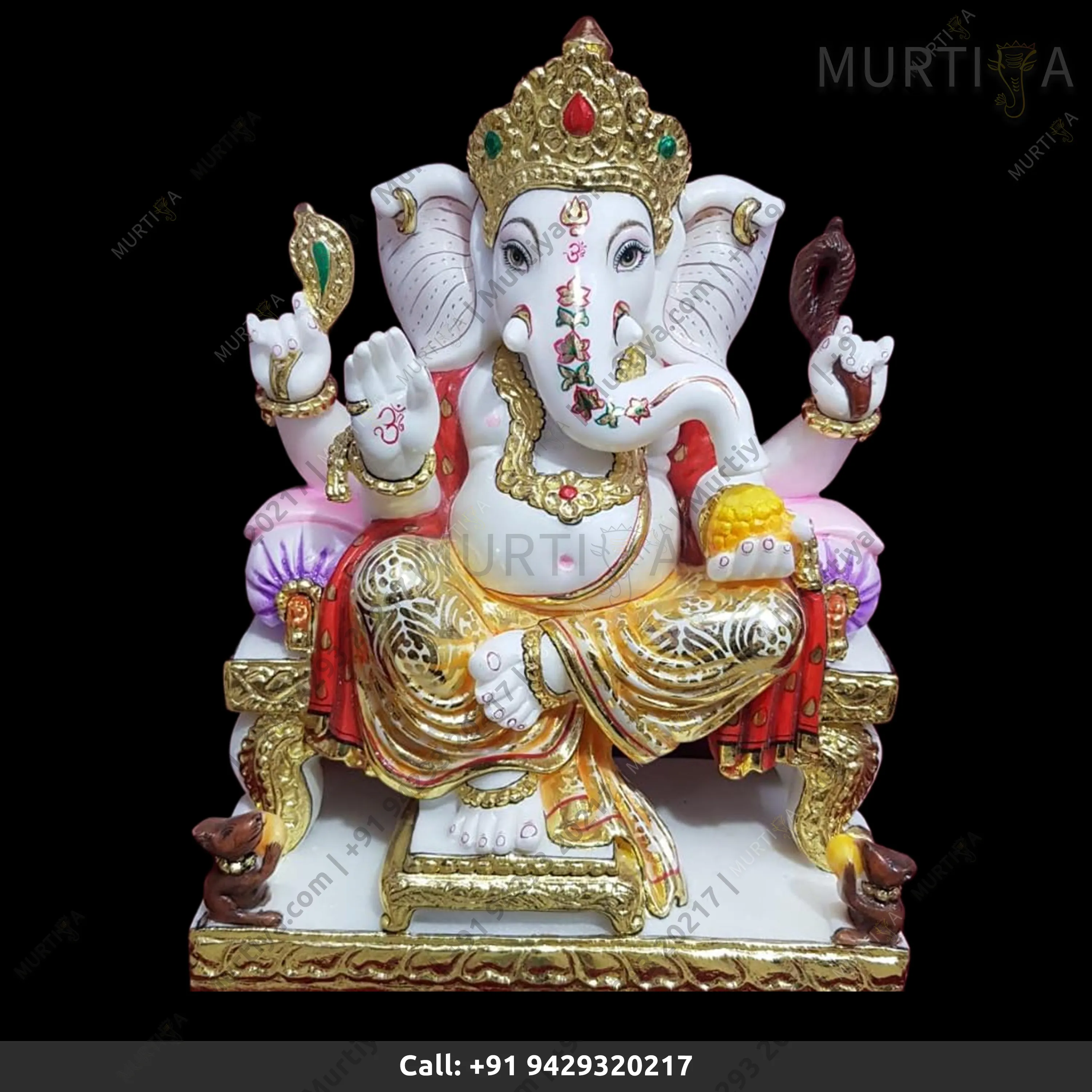
A seated Ganesh with the trunk curling to the left is the classic devotional form and the safest choice for a home shrine. Standing forms suit larger compositions. Siddhi and Riddhi additions require a wider base.
3. Choose the marble grade
If the face will be seen closely every day, pay for a higher grade. For a large murti viewed from a distance, a mid grade is a sensible saving. Ask for the grade to be stated explicitly.
4. Check the base
A stable base matters more than it looks. Flat, wide bases sit safely on a shelf; very small or irregular bases can tip when the murti is dressed with heavy jewellery.
5. Choose the finish
Polished — bright, easy to wipe, suits minimal shrines.
Matte — traditional, hides water spotting.
Painted — colourful, suits festival displays and family shrines.
6. Confirm the practical details
Ask for the finished weight, whether the murti is carved from a single block, and how it will be packed. On a custom order, ask to see photographs before dispatch.
Frequently asked questions
What is the most important factor when choosing a Ganesh murti?
Size. Measure the mandir niche and clearance for the crown first; most other decisions follow from that constraint.
Should I choose a single-block Ganesh murti?
Yes where possible. Smaller Ganesh murtis are usually carved from one block, which avoids visible seams and weak joints.
Is a matte or polished finish better?
Polished is brighter and easier to wipe; matte looks more traditional and hides water spotting better in daily use.
Where to go next