ISKCON worship is unusually demanding of a deity: daily dressing, frequent abhishek and a full festival calendar. Choose with that routine in mind.
Start with the altar, not the deity
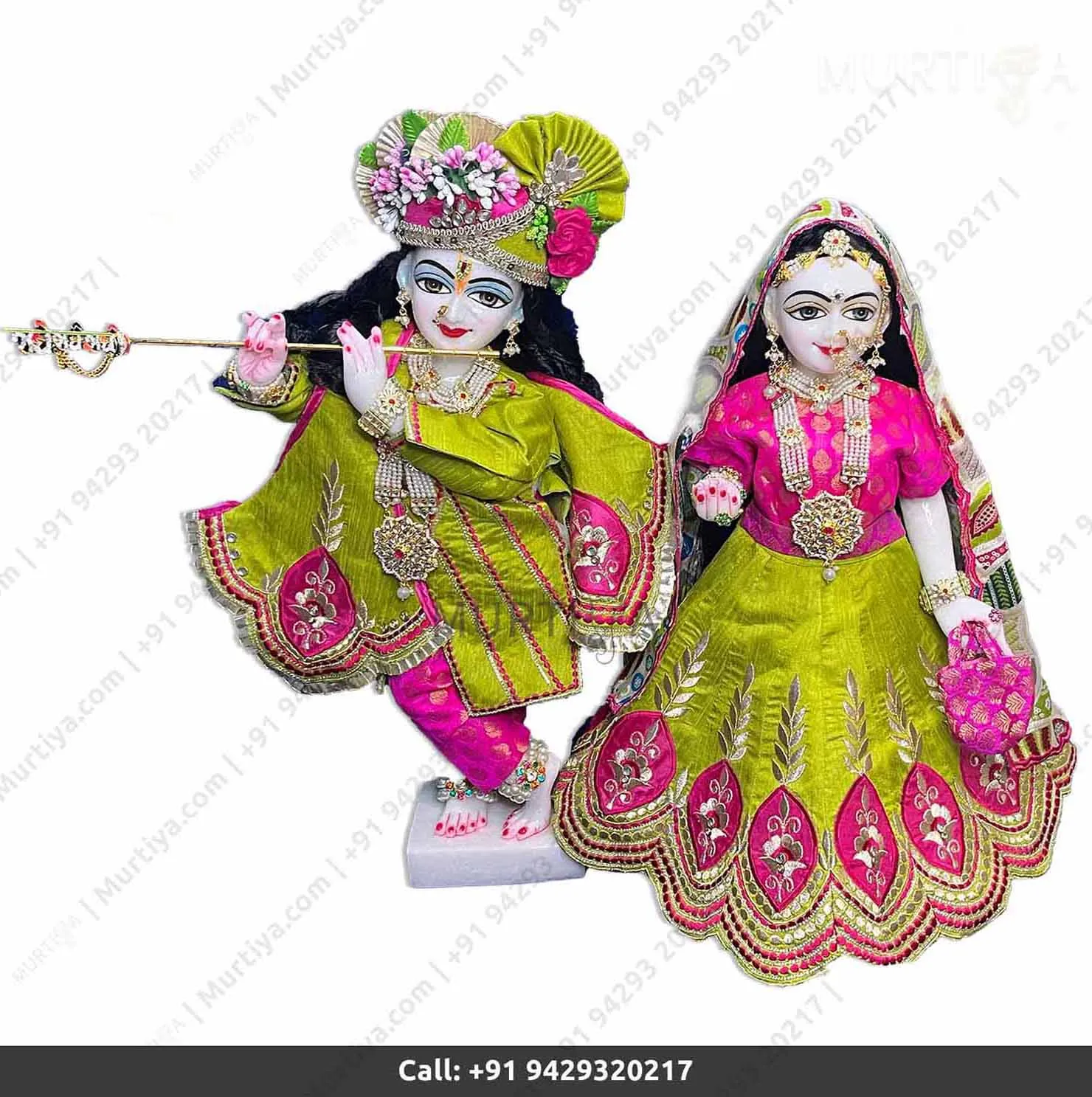
Measure the altar height, the width available for a pair, and the clearance needed for crowns and for dressing. ISKCON deities are often dressed with elaborate crowns, so the usable height is less than the physical height.
Form and pose
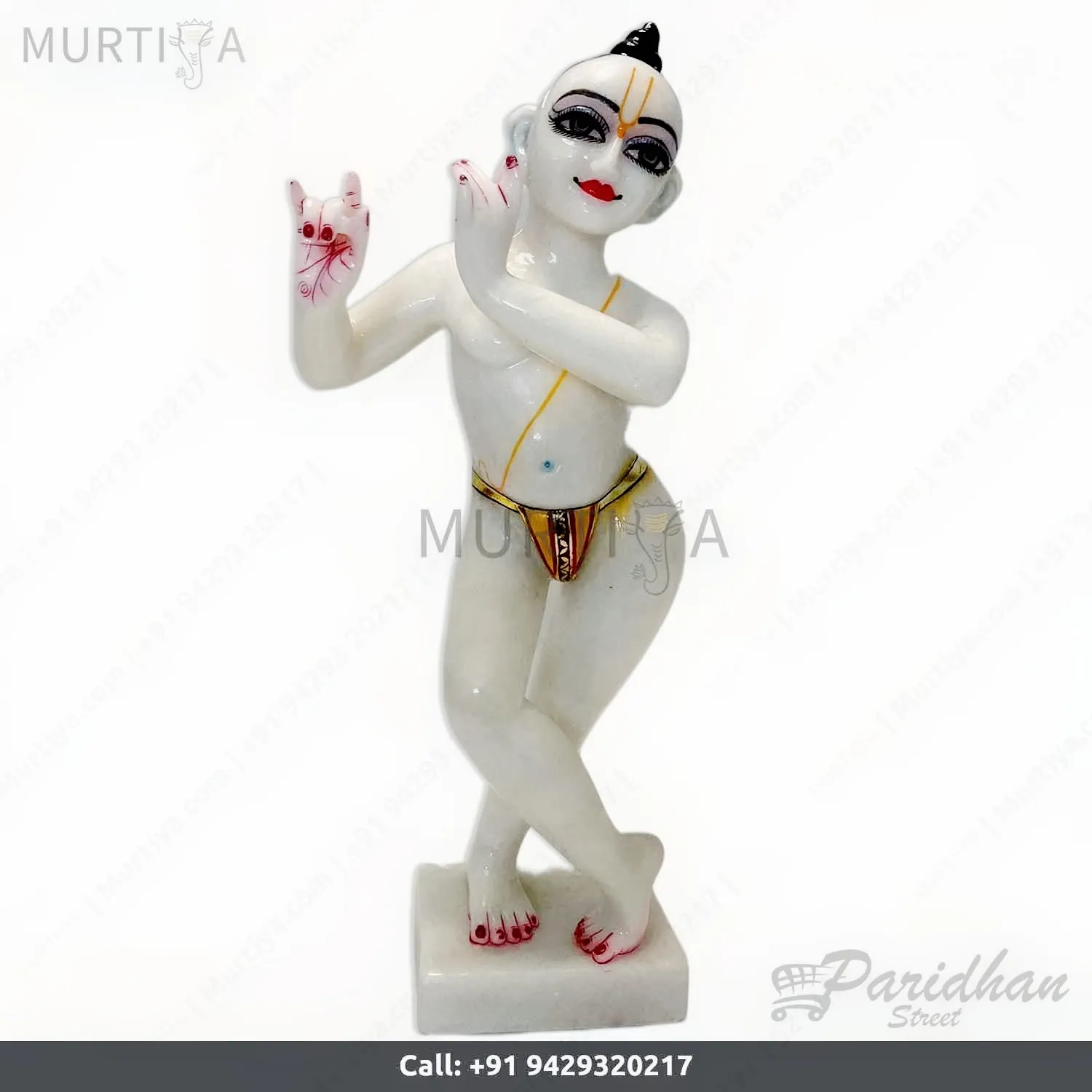
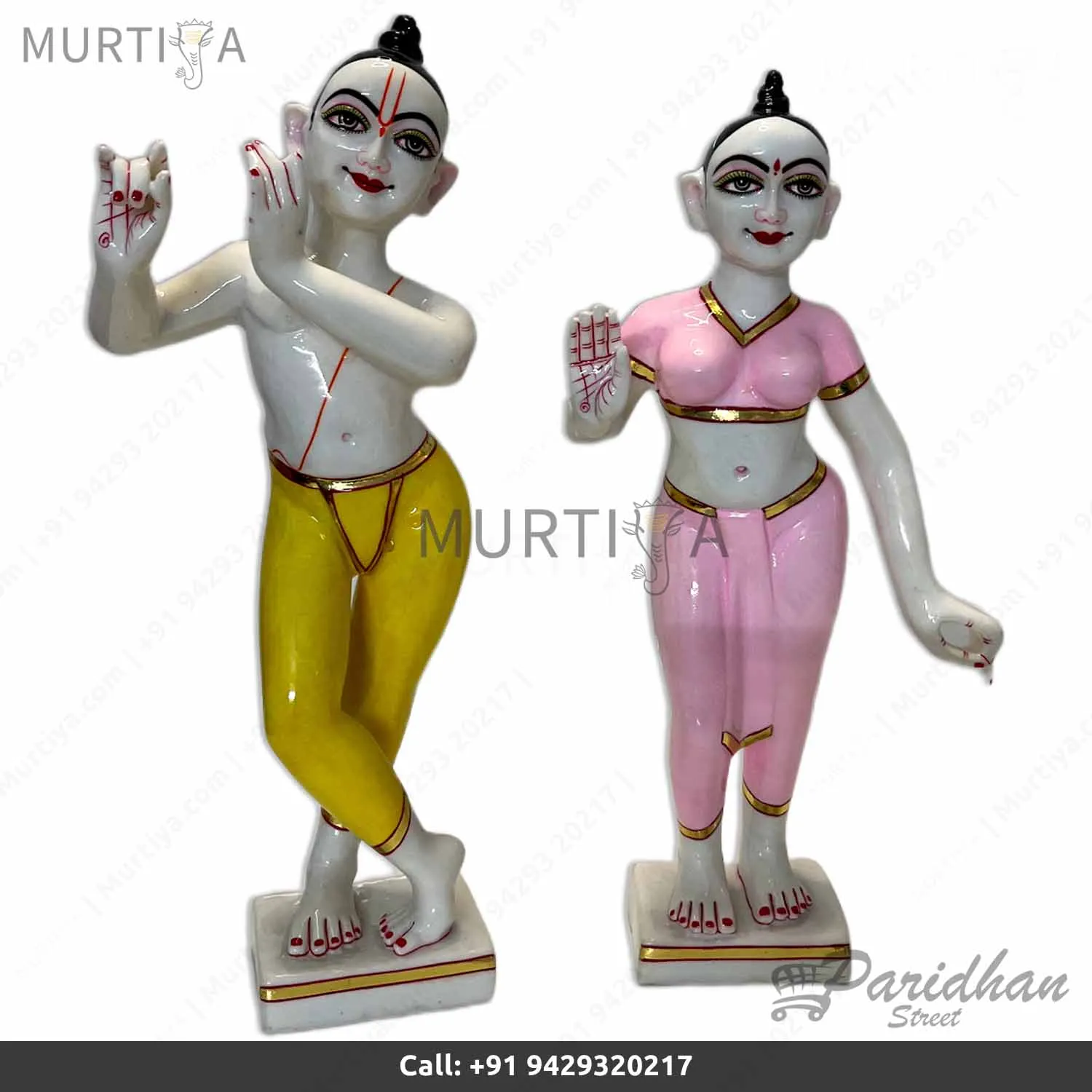
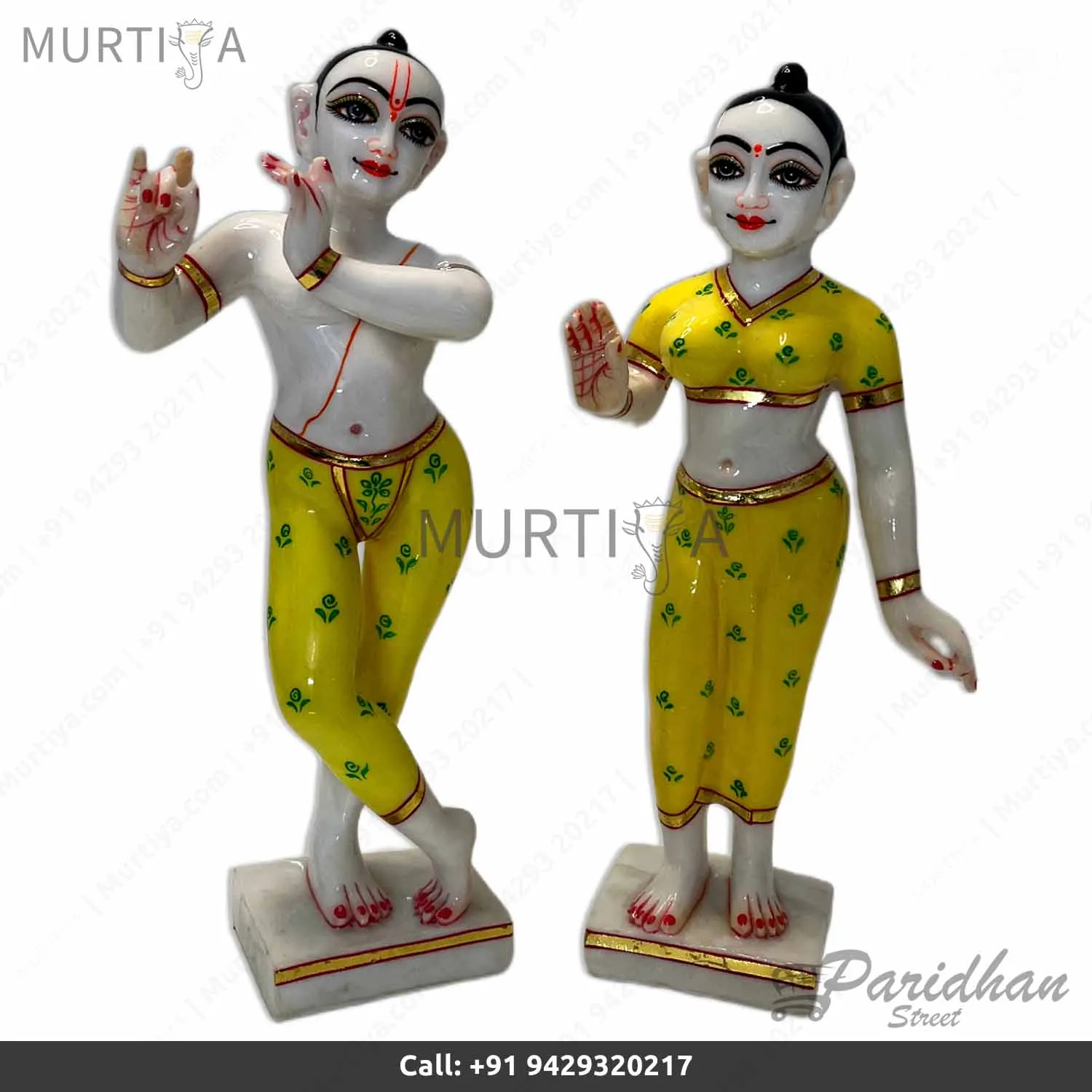
Murli Manohar (flute) and tribhanga standing forms are the most common. Ask whether the temple follows a particular reference; if so, carve to that. Matching a reference is more important here than novelty.
Proportion across the pair
Radha and Krishna are carved as a matched pair with a consistent height ratio and matching base widths. If you already have one, we can carve the other to match — send the height and a photograph.
Undercut jewellery and drapery
Because the deities are dressed daily, jewellery and drapery should be undercut so cloth sits naturally against the stone. Deeply carved wooden-looking ornaments make dressing awkward.
Finish
Polished white marble is the most common choice. Matte finishes hide water spotting better where abhishek is frequent.
Frequently asked questions
What size ISKCON Radha Krishna murti do temples use?
Temple deities are typically 3 feet and above, while home altars usually use 12 to 18 inch pairs. Both are carved to order.
Can you match one deity to another I already have?
Yes. Send the height, base width and photographs of the existing figure and we will carve a matching partner.
Why does undercut jewellery matter for ISKCON deities?
Because they are dressed daily. Undercut ornamentation lets cloth sit naturally rather than bunching against carved ornaments.
Where to go next