A large Ganesh is a project, not a purchase. These are the decisions that have to be fixed before the block is cut.
Fix the height against the sanctum
Statue height should relate to the ceiling and the viewing distance. For a hall viewed from 10 to 20 feet, 4 to 6 feet usually reads well. For a smaller shrine room, 3 to 4 feet is often better proportioned.
Settle the composition
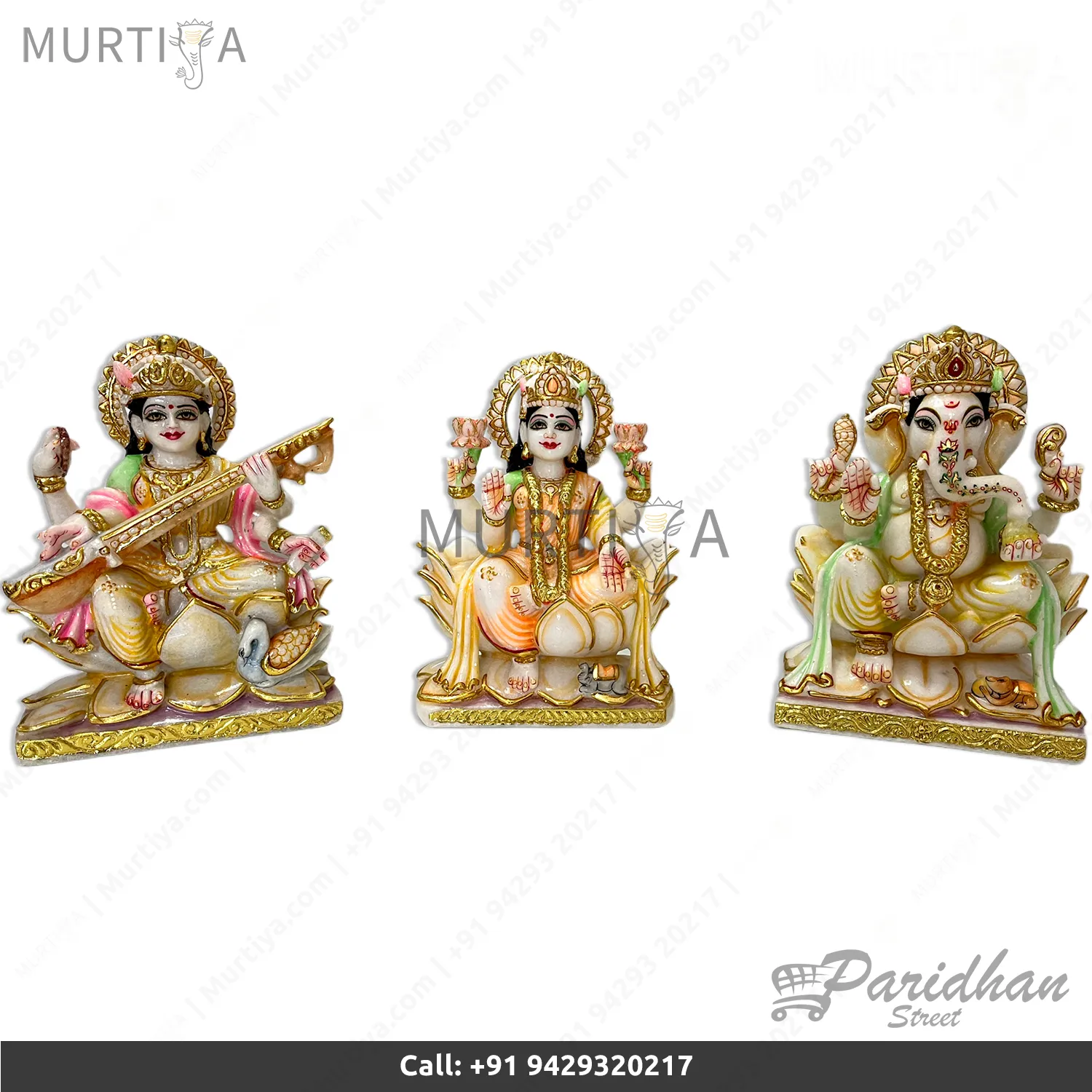
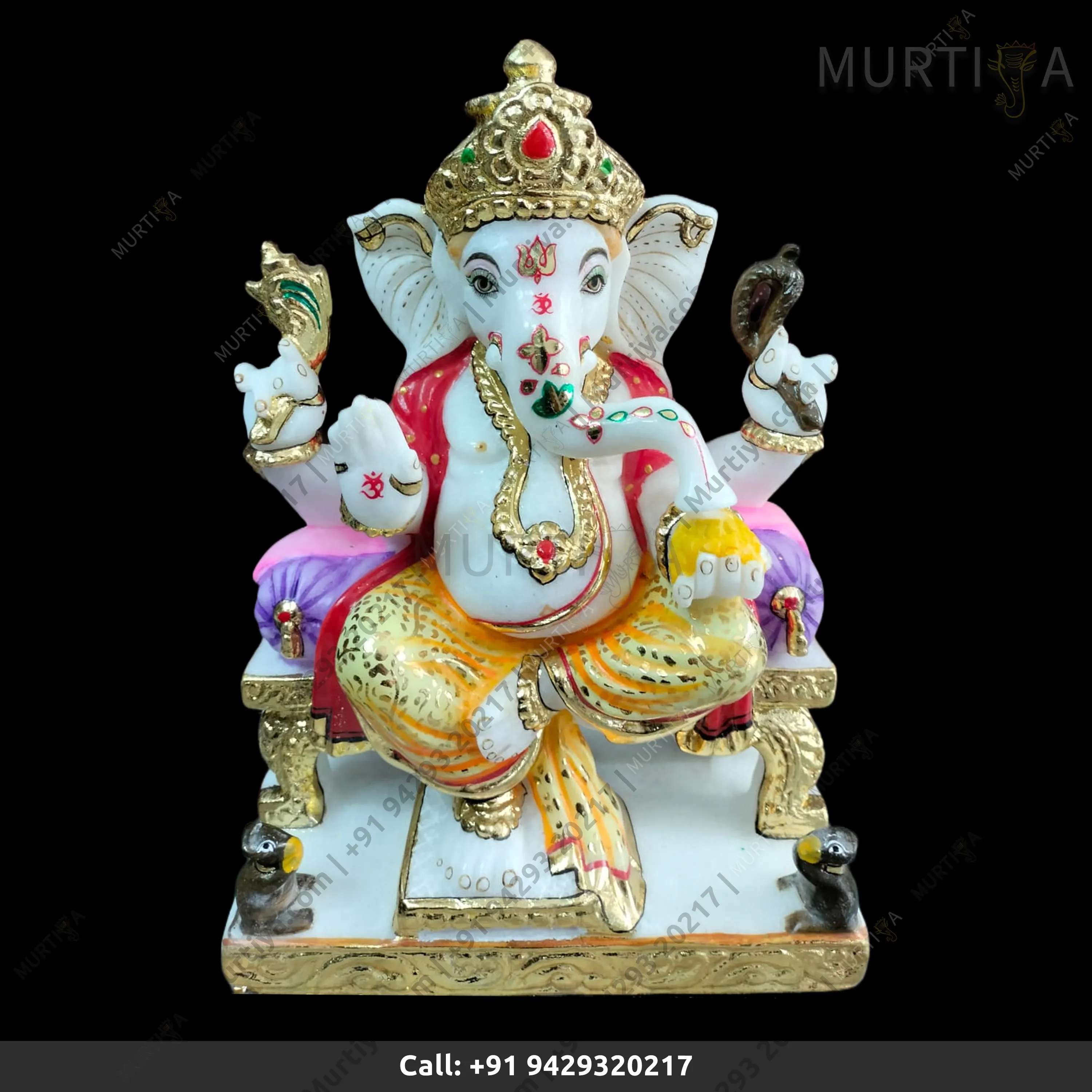
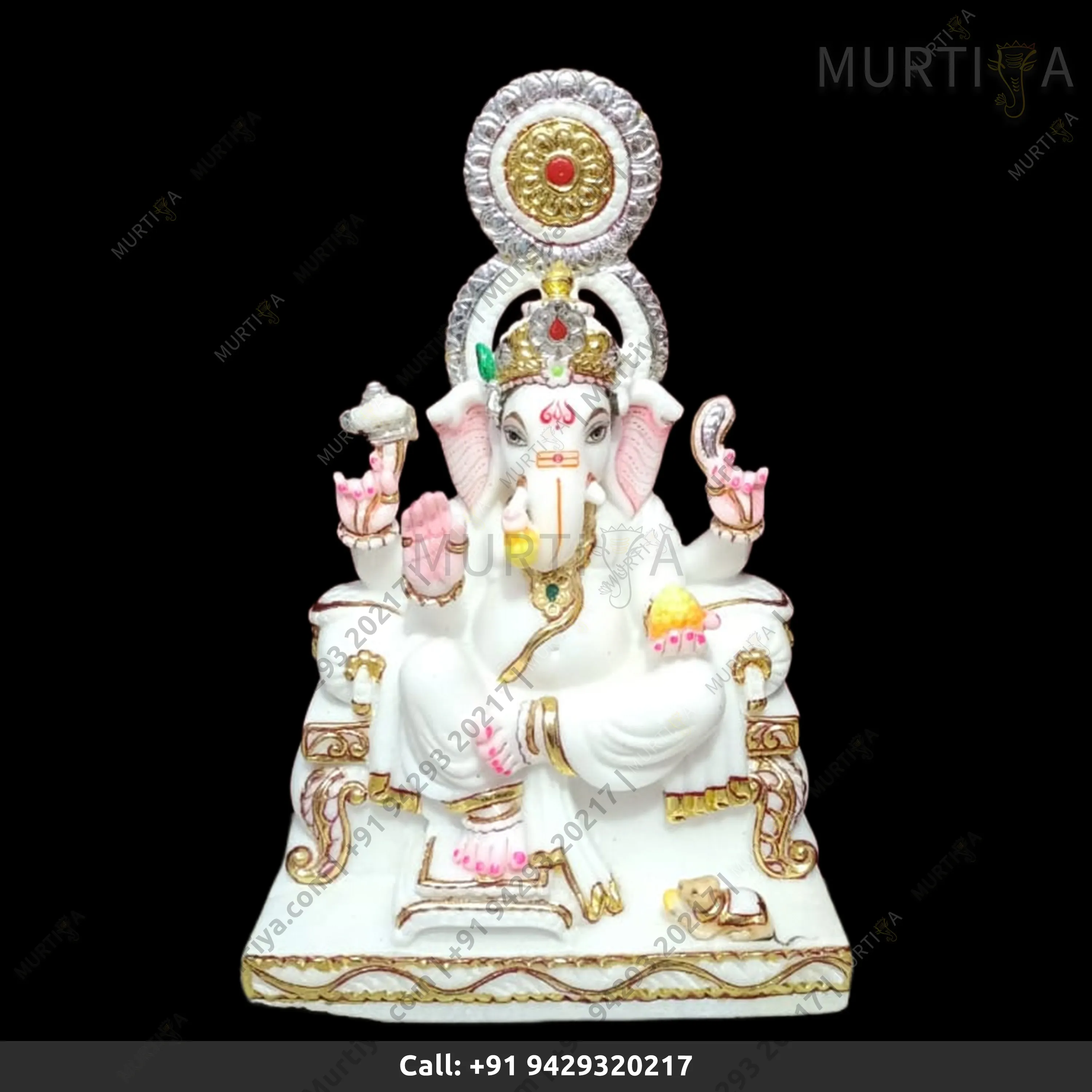
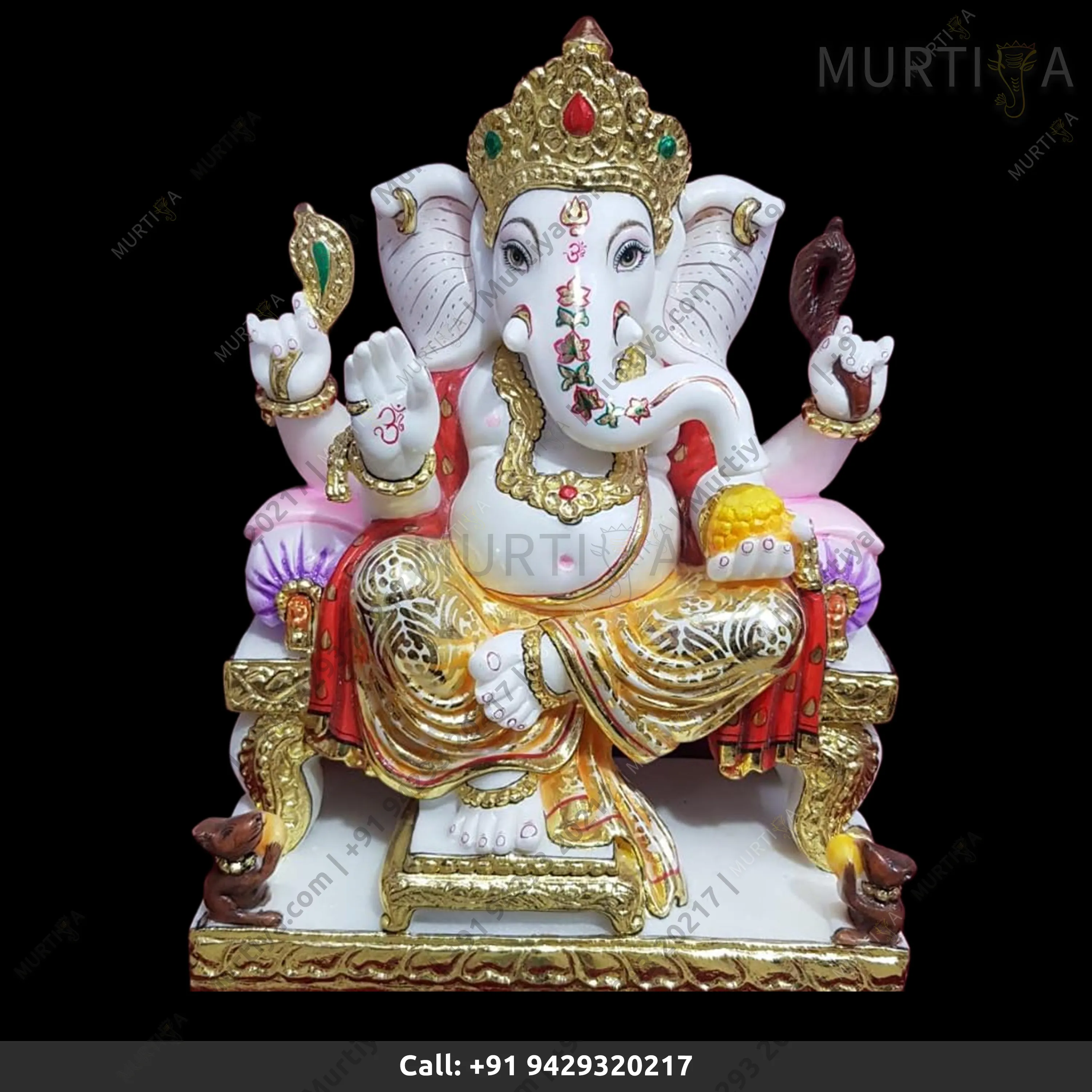
The seated form is structurally safer at scale than a standing figure with raised arms. If Siddhi and Riddhi are included, the base width grows and must be planned into the plinth.
Plan the base and plinth
The plinth must be level, rigid and able to take the statue's weight plus dressing and offerings. Confirm the finished weight with the workshop before casting or building the plinth.
Plan the route
Measure the narrowest doorway, the staircase and the turn into the sanctum. Many large statues cannot enter through the final door and have to be installed in sections or before the structure is closed.
Plan the join points
Above a certain size, a workshop may carve the statue in sections with engineered joins. Ask in advance where those joins are and how they will be concealed, and insist that this is disclosed in writing.
Frequently asked questions
How tall can a large marble Ganesh statue be?
We regularly carve 4 to 6 foot statues and can discuss larger institutional projects. Maximum size depends on block availability and the transport route.
What is the most structurally stable large Ganesh pose?
A seated form is safer at scale than a standing figure with raised arms, because the weight stays closer to the centre line.
How do I know if the statue will fit through the door?
Measure the narrowest doorway, staircase and entry turn before ordering, and share the measurements with the workshop during design.
Where to go next