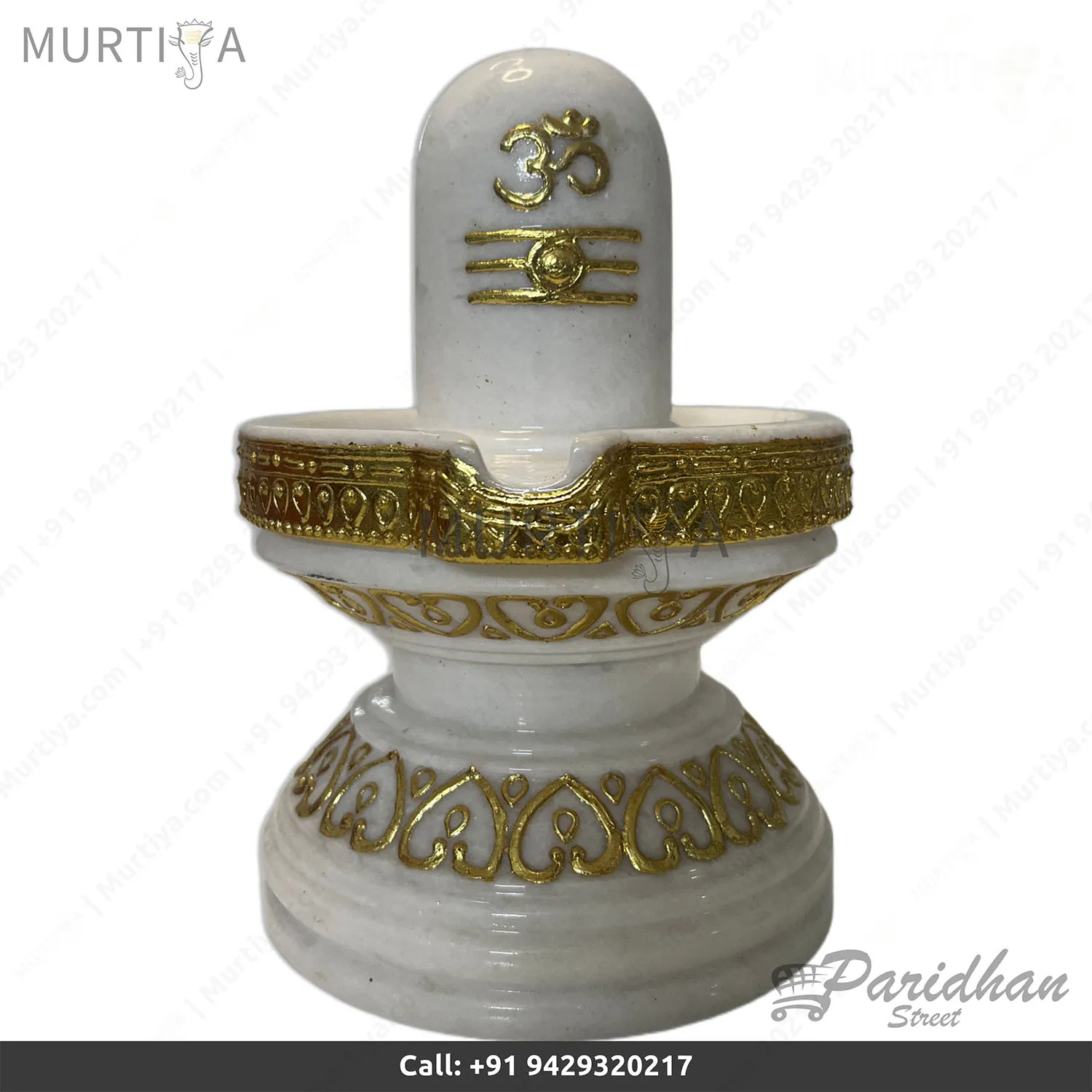
Abhishek is a wet, repetitive ritual. The material has to tolerate constant moisture and still look clean — a surprisingly short list.
What abhishek demands
Resistance to water absorption and staining.
No reaction to milk, curd, honey or oil.
A surface that can be wiped dry without leaving marks.
No paint or coating that can lift.
Marble
Low-porosity marble absorbs very little, wipes dry easily and can be repolished. It has no coating to peel. This makes it the most practical material for frequent abhishek, especially for a Shivling.
Brass and bronze
Brass tolerates water but tarnishes and can develop water spots if left wet. It needs drying and periodic polishing.
Wood
Wood absorbs water, swells, cracks and stains. It suits dry worship and carved mandir panels, not repeated wet offerings.
Practical routine
Whichever material you choose, dry the idol after abhishek rather than letting it air dry. For marble, that single habit prevents most staining.
Frequently asked questions
Is marble good for daily abhishek?
Yes. Low-porosity marble absorbs little water, wipes dry easily and has no coating that can peel, which makes it the most practical choice.
Can I do abhishek on a painted marble idol?
Water should be avoided on painted surfaces. Use a plain or matte-finished marble idol where abhishek is a regular practice.
Should I dry the idol after abhishek?
Yes. Drying after every abhishek prevents water spotting and, on marble, prevents most long-term staining.
Where to go next