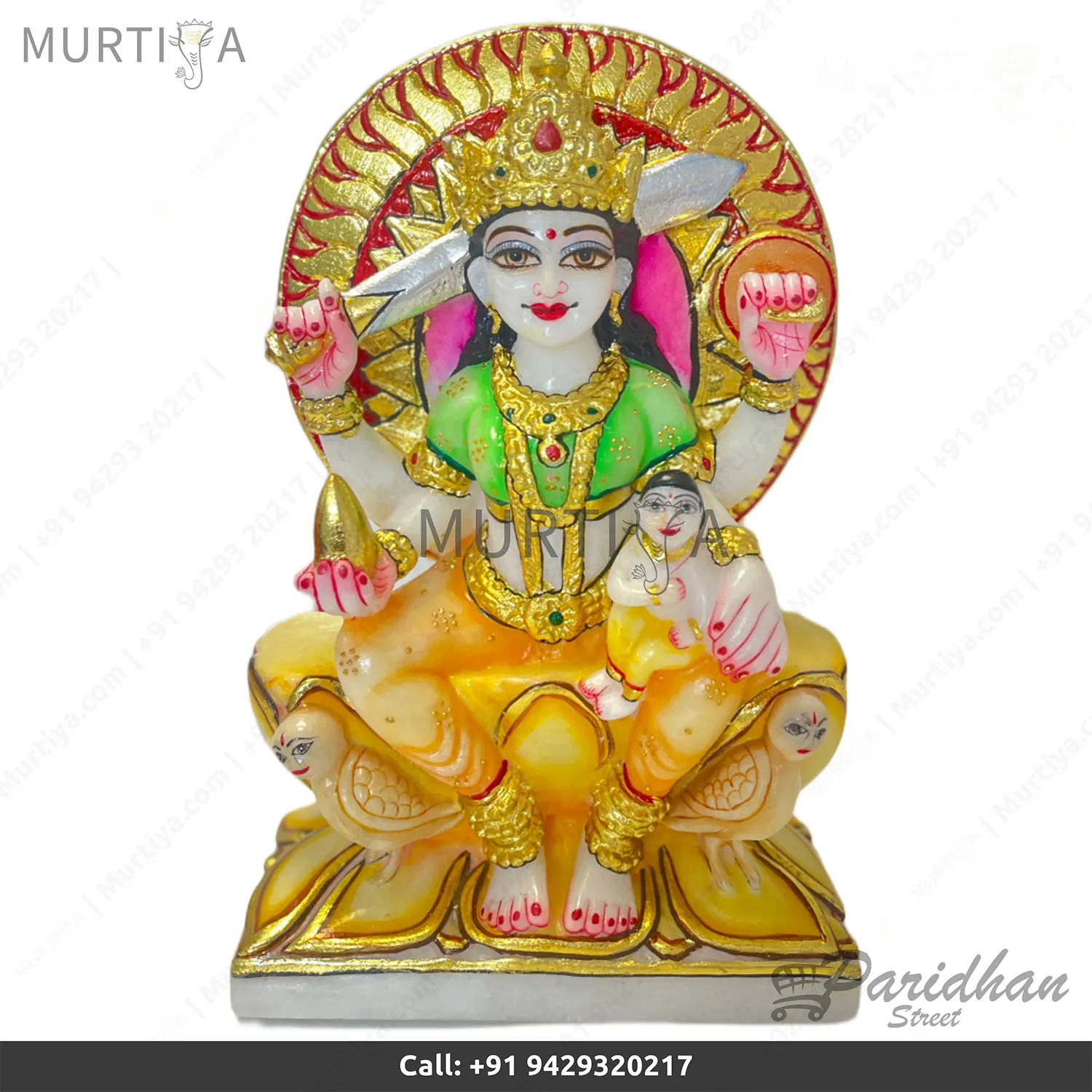
If you cannot find your family or regional deity readymade, commissioning one is straightforward — provided the reference is clear.
What to send
Photographs from the front, both sides and, where possible, the back.
A close-up of the face and any distinctive ornament.
The height you need, measured against the actual shrine.
Any information about the region or tradition it belongs to.
Why references matter more than descriptions
Regional forms differ in small, specific ways — the angle of a weapon, the shape of a crown, the number of ornaments. A photograph removes guesswork that text cannot.
Confirm before carving
Ask for a sketch or a confirmation of the composition before stone is cut. Corrections at the drawing stage are free; corrections in marble are not.
Finishing choices
Decide early whether the murti stays plain or is painted, and whether ornaments are accented. This affects the final stages of carving and cannot be decided after polishing.
Timeline
A single seated regional deity typically takes a few weeks; complex multi-arm or multi-figure compositions take longer. Confirm the timeline in writing.
Frequently asked questions
Can you carve a deity that is not commonly available?
Yes. Send clear photographs from multiple angles, the required height, and any regional context, and the composition will be confirmed before carving.
What if I only have a small or old photograph?
Send what you have. A workshop can usually work from an older photograph if the distinctive features and proportions are visible.
Can I change the finish after carving starts?
Decide the finish before the final stages. Plain versus painted affects polishing and ornament treatment, and is hard to change afterwards.
Where to go next