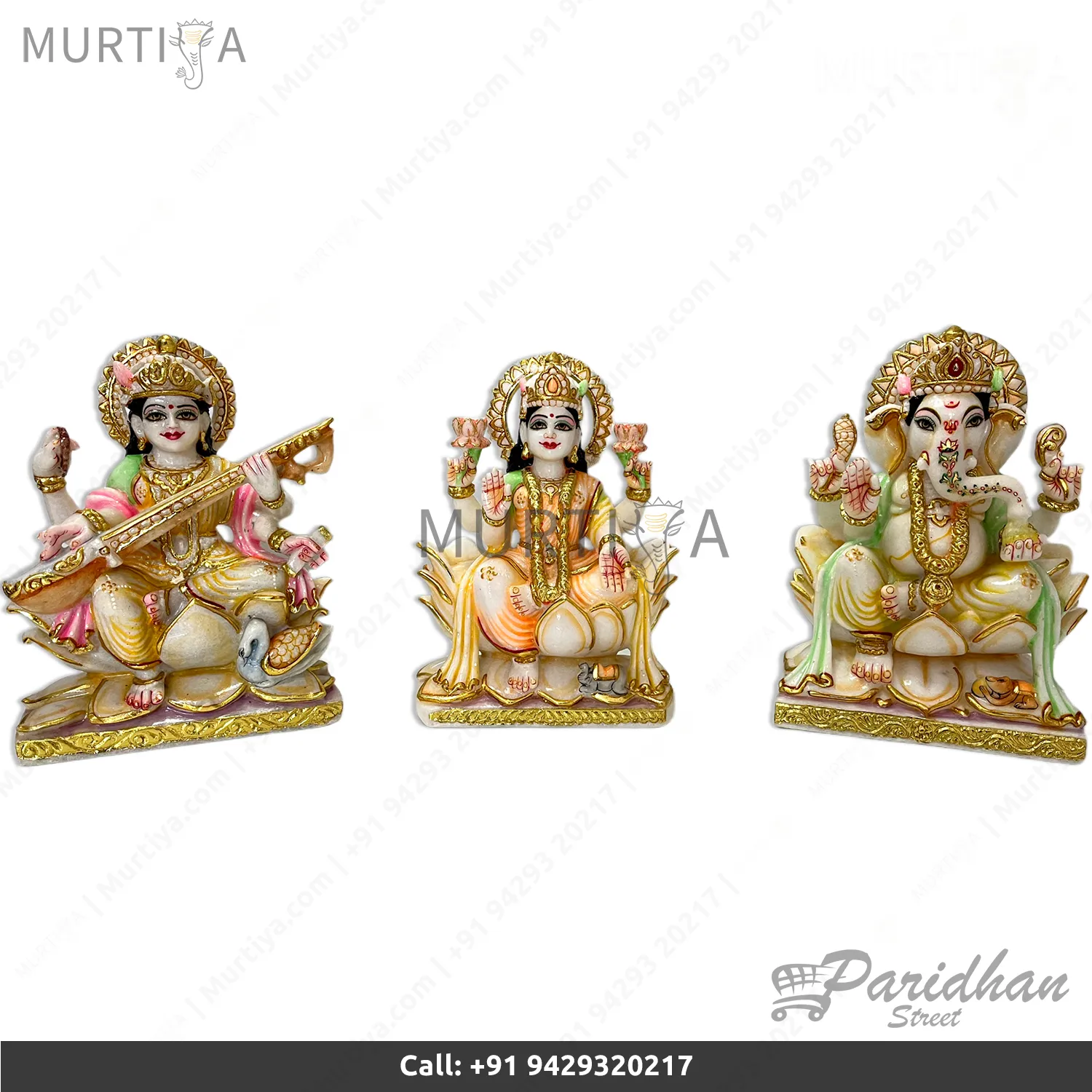
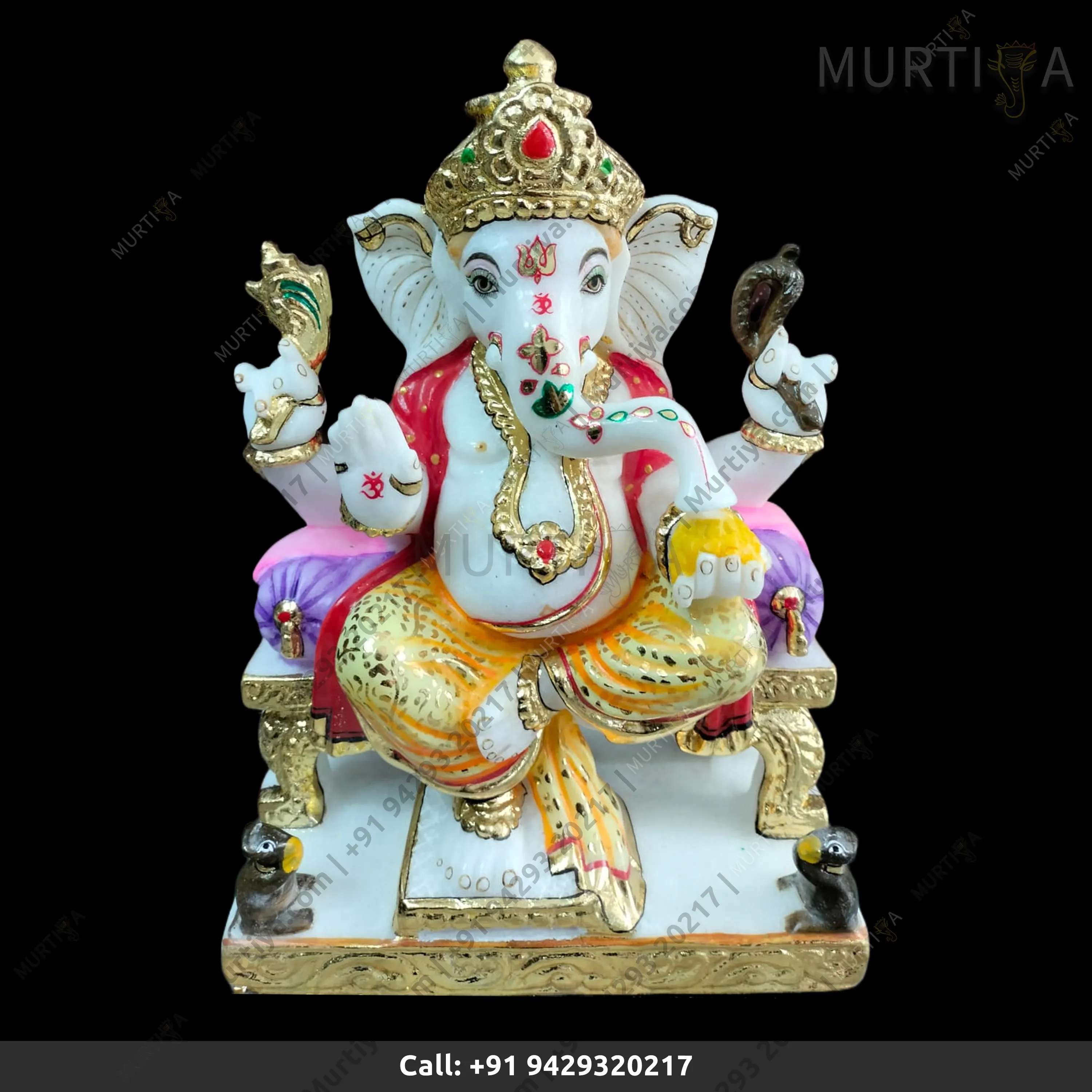
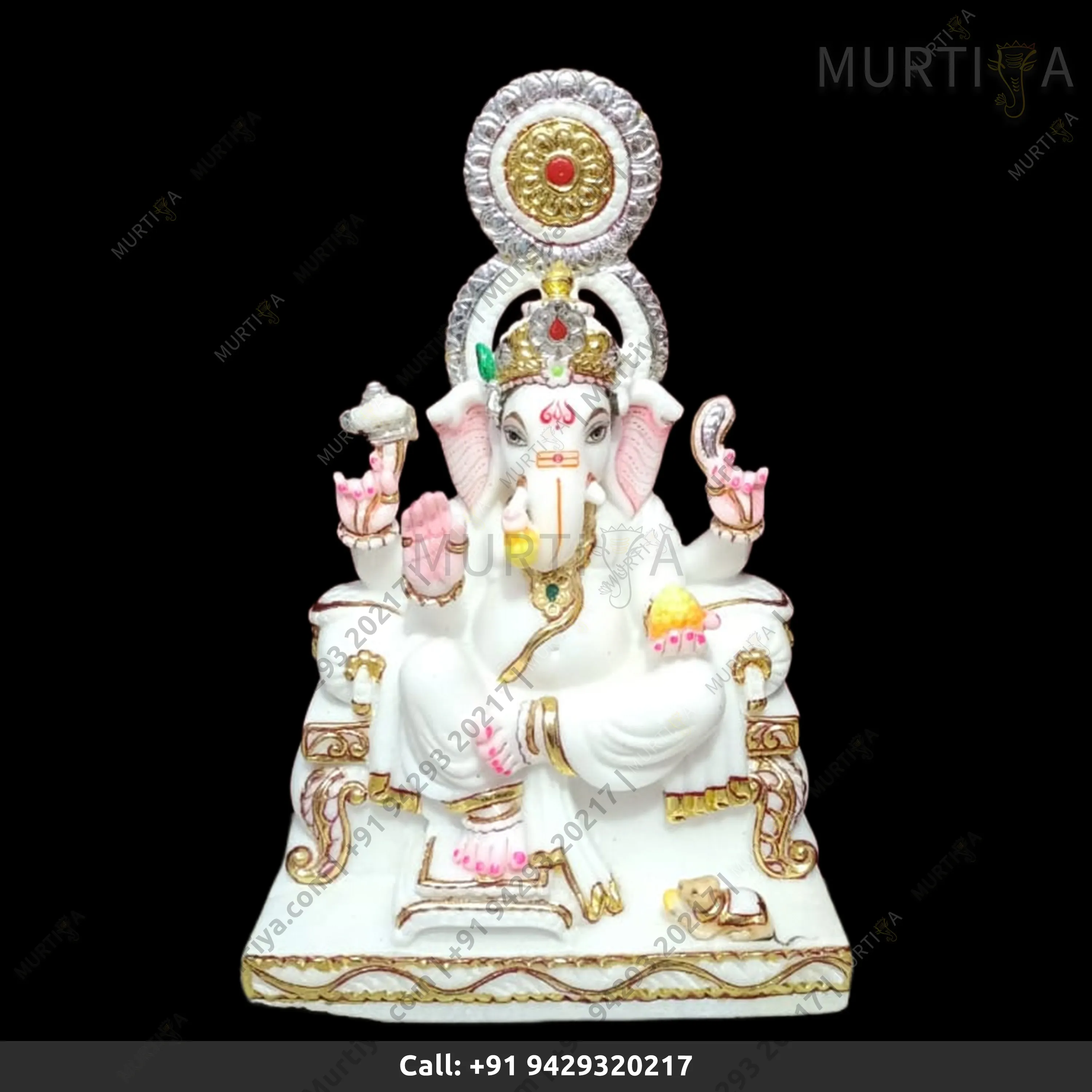
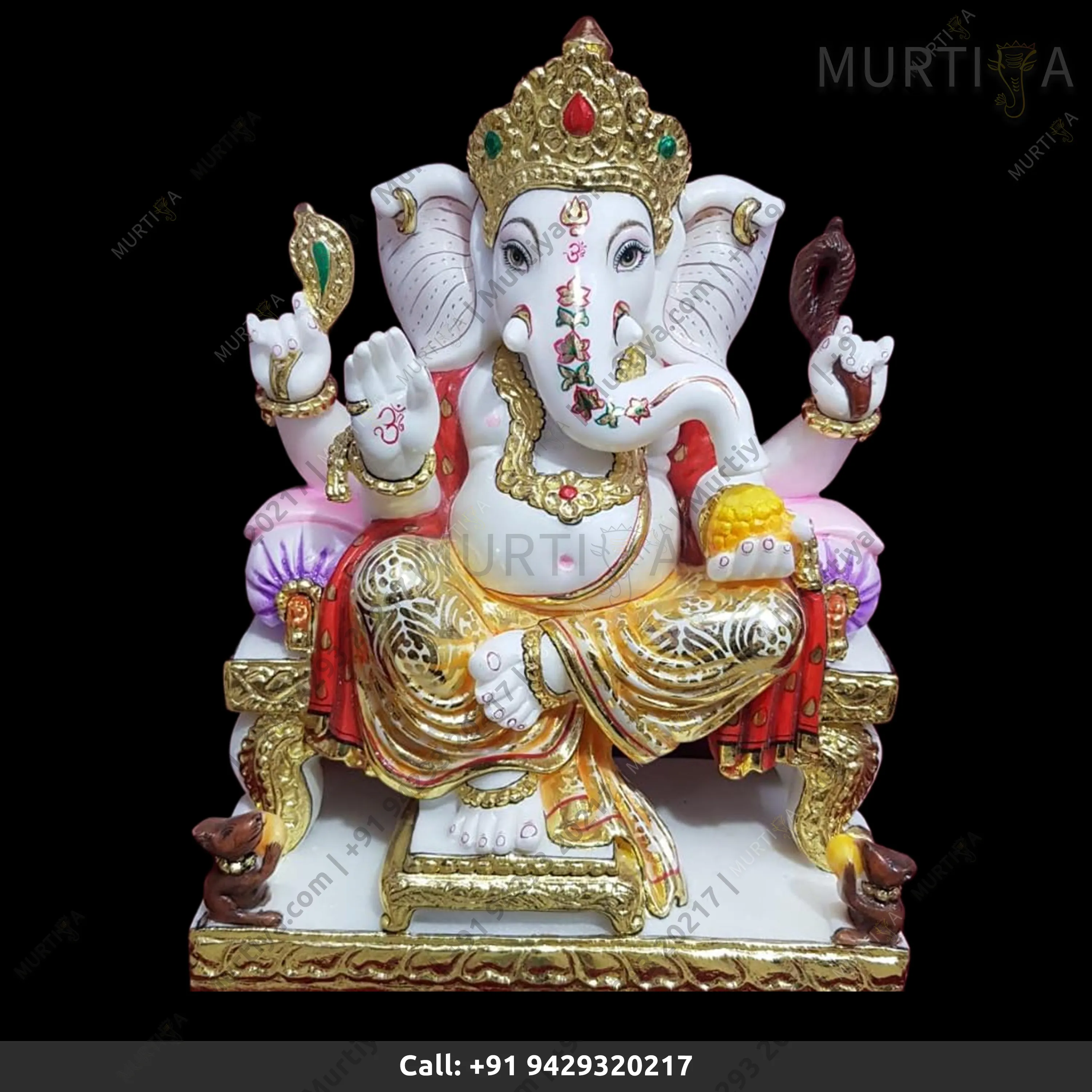
Machine-made idols are not dishonest — they are simply a different product. The problem is when they are sold as handmade.
Signs of machine cutting or moulding
Identical repetition. If a seller shows ten "handmade" idols and they are pixel-identical, they are moulded.
Shallow, rounded detail. Ornaments lack undercuts and shadow; edges are uniformly soft.
Suspiciously low weight. Resin and marble-dust pieces are light for their size.
No tool marks. Hand carving leaves fine chisel texture on unpolished areas.
What hand carving gives you
Undercut jewellery that casts real shadow, drapery thin enough to read as cloth, facial detail that survives close inspection, and the ability to follow an unusual reference or pose.
What you lose with machine-made
Detail depth, individuality, and often durability — moulded pieces chip at edges and cannot be repolished the way solid stone can.
How to ask
Ask for photographs of the actual piece from multiple angles, and for the finished weight. Ask whether the murti is carved or moulded. A workshop that carves will answer these easily.
Frequently asked questions
How can I tell if a Ganesh idol is handmade?
Look for undercut detail, varied tool marks, individual features and heavier weight. Identical repeated idols are moulded.
Are machine-made Ganesh idols cheaper?
Yes, usually by a wide margin, because moulding is far faster than carving. The trade-off is detail depth and durability.
Should I always avoid machine-made idols?
Not necessarily. They can suit temporary displays. For permanent daily worship, hand-carved marble is more durable and repairable.
Where to go next