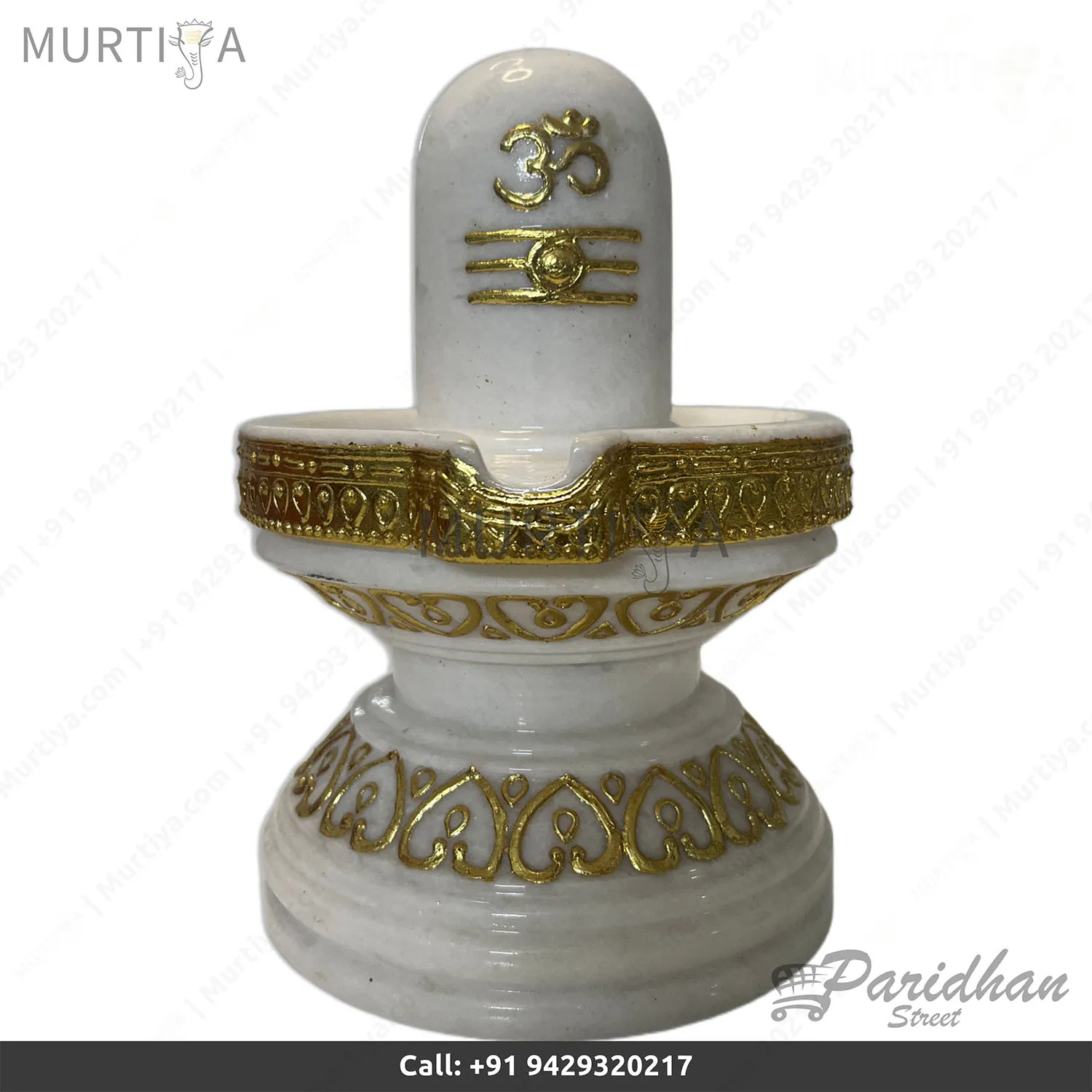
A resin idol can look convincing in a photograph. In person, five simple checks expose the difference immediately.
1. Weight
Solid marble is heavy — a 12-inch murti commonly weighs several kilograms. If you can lift a large murti easily with one hand, it is almost certainly resin or marble dust.
2. Temperature
Marble feels distinctly cold at first touch and warms slowly. Resin and composite feel close to room temperature almost immediately.
3. Sound
Tap a hidden area gently with a fingernail. Stone gives a dull, solid click. Resin gives a hollow or plastic tap. Marble-dust composite sits somewhere between and often sounds dead.
4. Surface and grain
Natural marble has subtle variation across the surface. Moulded pieces are suspiciously uniform, with soft detail on the face and ornaments and no natural translucency at thin edges.
5. Edges and chips
Look at a chip or an unfinished edge. Real marble is crystalline on a broken face. Composite shows a filler-and-binder texture, and resin looks smooth and waxy.
Why this matters beyond price
A resin idol will not accept daily abhishek, and paint or pigment on it can flake. Composite can discolour over time. For a murti meant to last, the material question is the one worth asking before anything else.
Frequently asked questions
Can a marble-dust idol be passed off as solid marble?
Yes. It is heavier than resin and can be finished to look similar, but it is lighter than solid marble, sounds dead when tapped, and lacks natural grain.
Is a resin idol always bad?
Not necessarily — resin can suit temporary displays. It is simply unsuitable where a murti will be washed, dressed daily or kept for decades.
Should I ask a seller for the stone weight?
Yes. Asking for the finished weight by size is a quick way to verify whether a piece is solid marble.
Where to go next