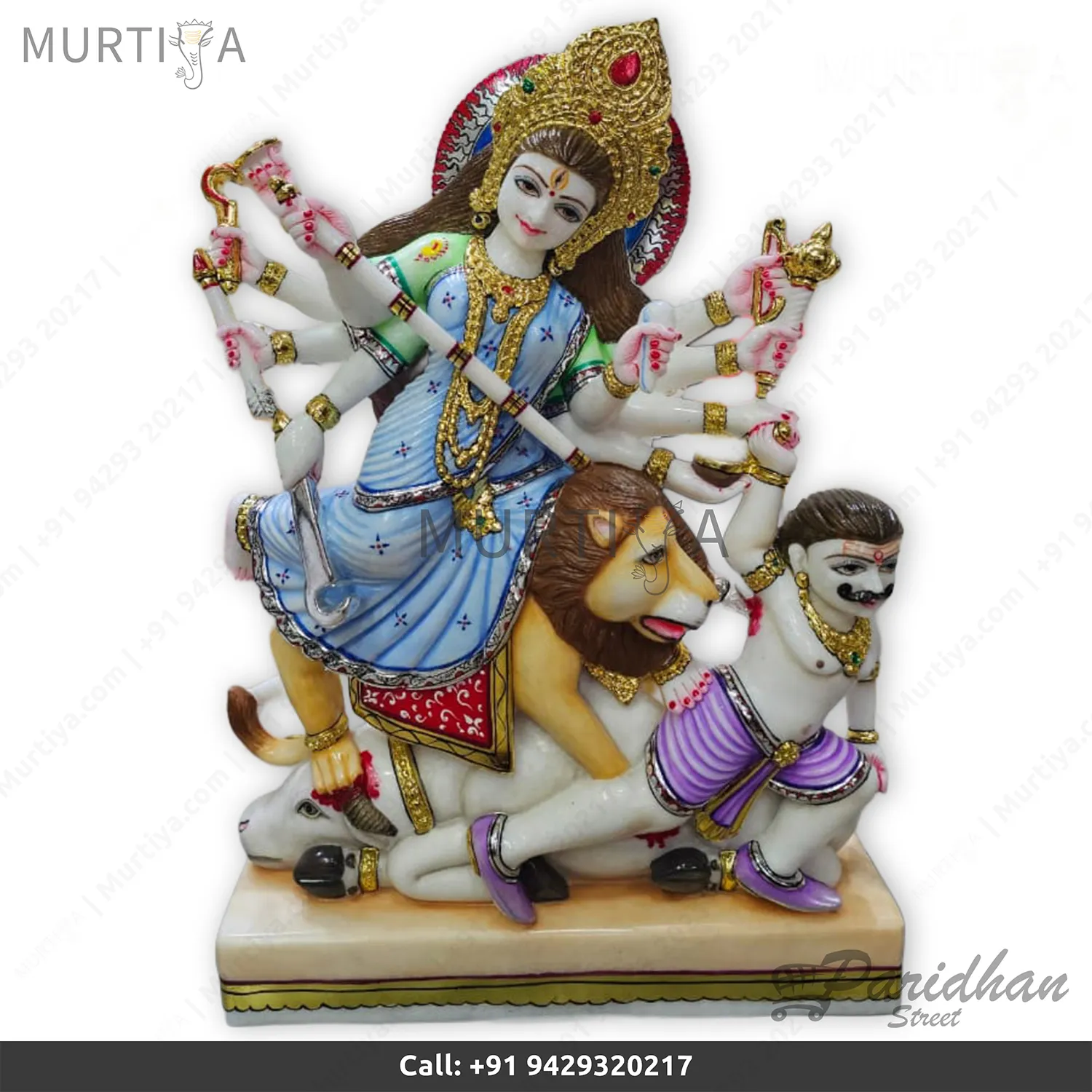
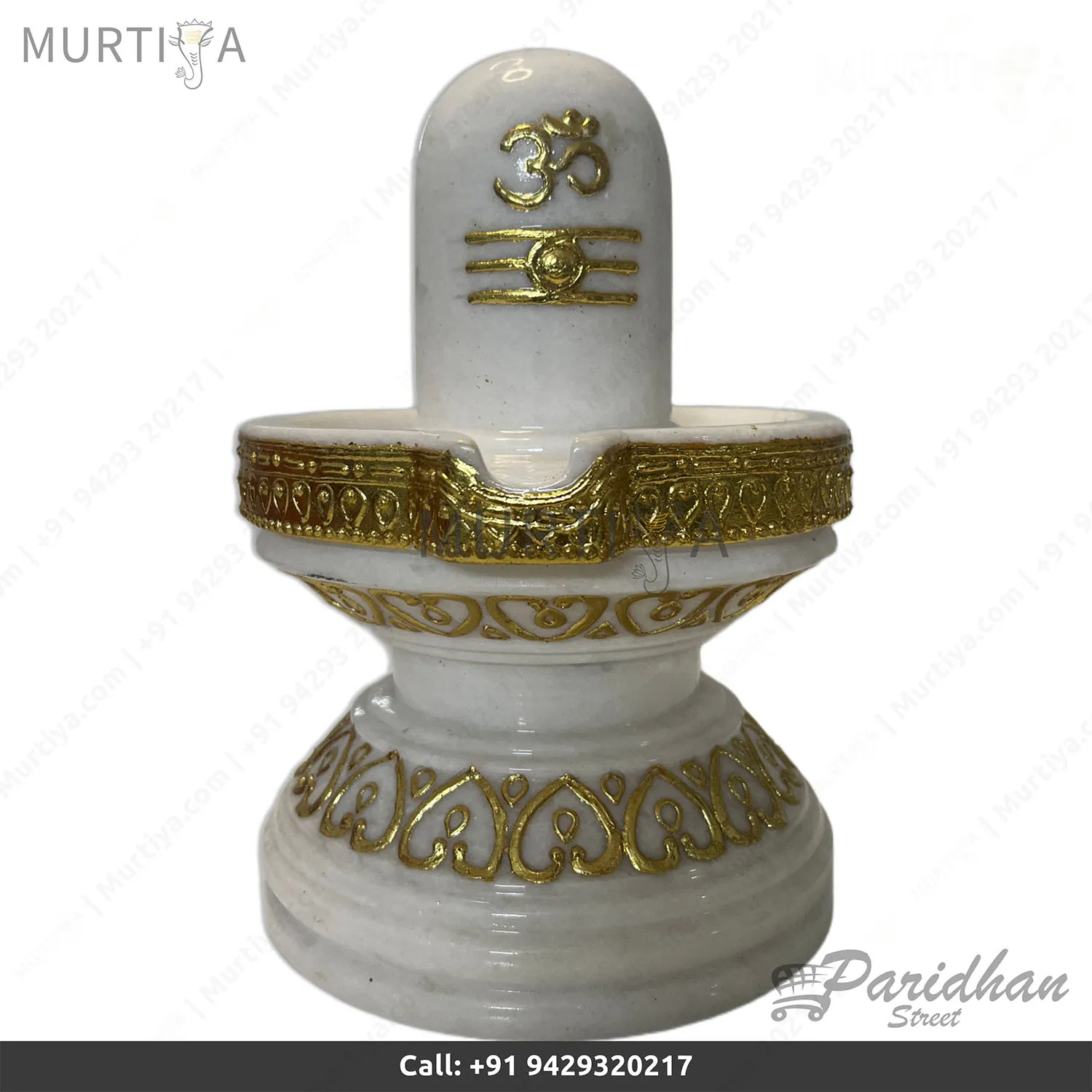
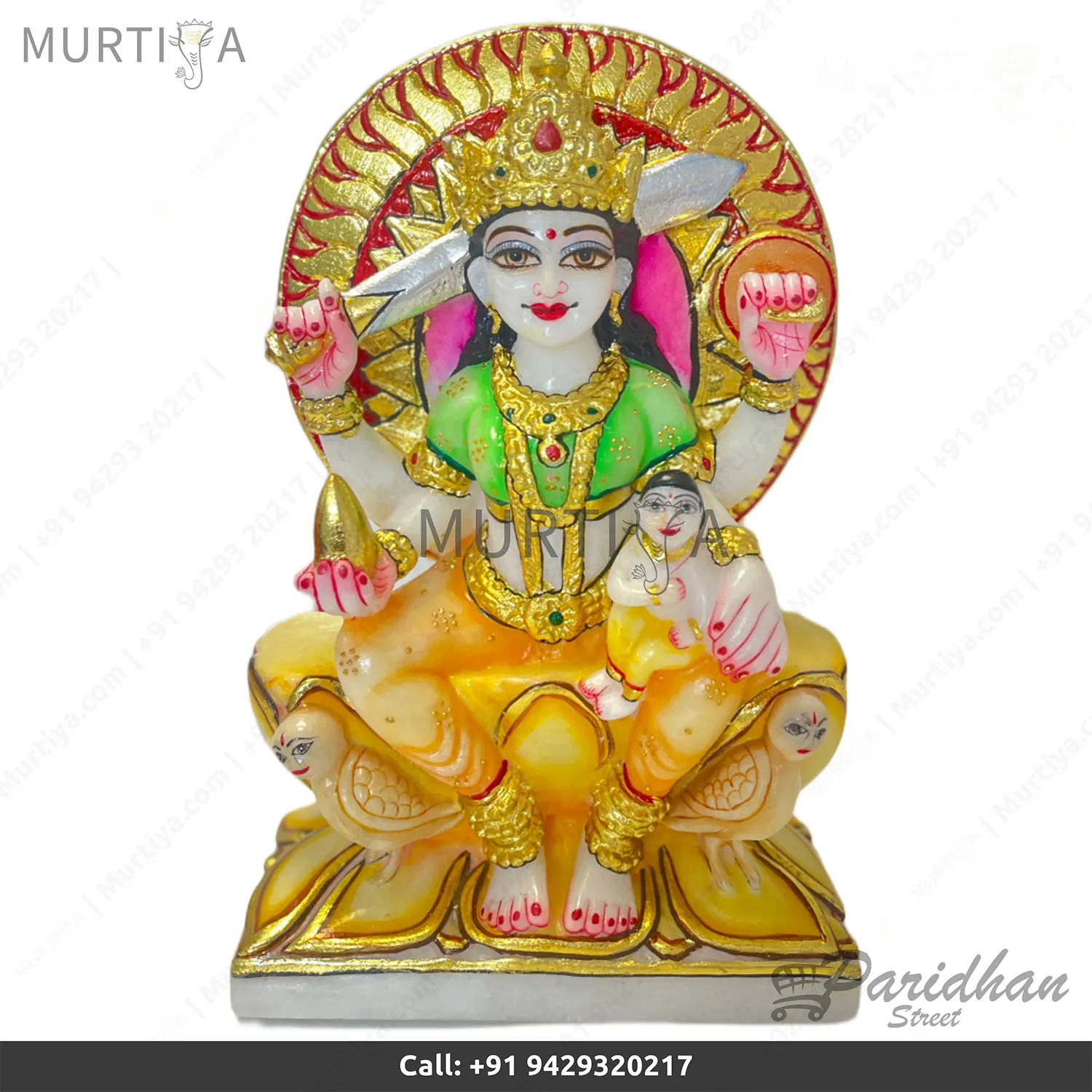
The cheapest way to make a large marble murti is to carve pieces separately and join them. The most durable way is to carve it from one block.
How joined pieces are made
An arm, a crown or a base is carved separately and bonded with adhesive and sometimes a metal pin. From a distance the murti looks complete; under close inspection a seam becomes visible along the join.
Why joints are a problem
Visual. Seams show as a line where the grain direction changes, and the join can trap dust.
Structural. A bonded joint is the weakest point in the piece and is exactly where damage occurs during transport or lifting.
Longevity. Adhesives age. Over decades, a joint can separate or discolour while the stone around it does not.
Worship. Daily washing can slowly work into a seam, which then stains.
When joins are unavoidable
Very large temple statues sometimes need separate blocks for structural or transport reasons, and a well-engineered internal joint is acceptable at that scale. The key is transparency: a good workshop tells you where and why a join exists.
What to ask
Ask directly whether the murti is carved from a single block, and where any joins are. For a piece above about 2 feet, also ask how the raised elements are supported. A clear answer is itself a quality signal.
Frequently asked questions
Are all marble murtis carved from one block?
No. Smaller murtis usually are. Large statues sometimes use joined blocks for structural or transport reasons, which is acceptable if the join is disclosed.
How can I spot a joined murti?
Look for a line where the grain direction changes, especially at shoulders, raised arms and the base. A seam often collects dust.
Do joined murtis break at the join?
A bonded joint is the weakest point. Well-engineered internal joints at large scale can be sound, but a badly glued visible seam is a risk.
Where to go next