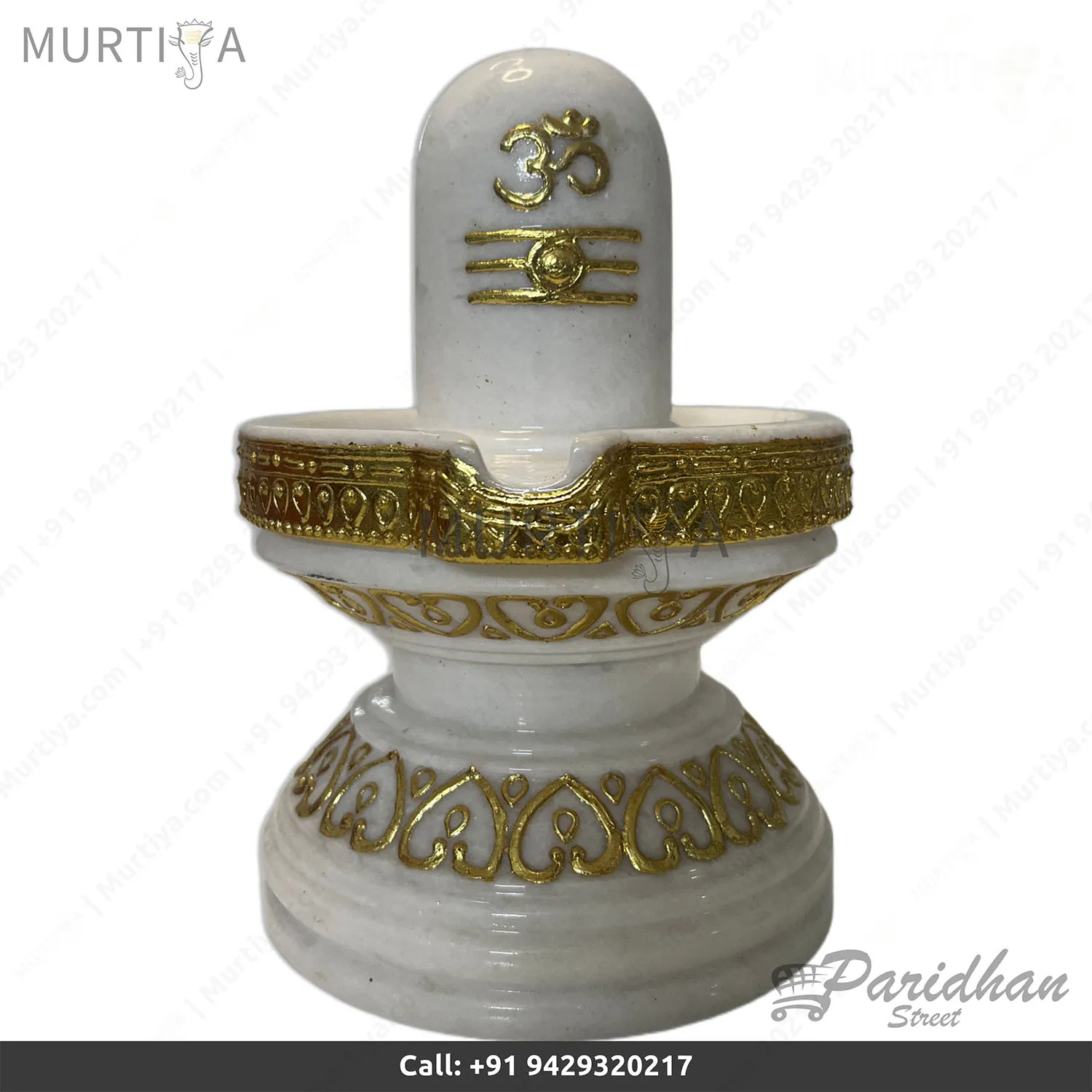
Grade labels vary between suppliers. What matters is not the letter but the specific qualities the letter is supposed to represent.
What grades usually describe
Whiteness and uniformity. Fewer grey veins and a consistent tone across the surface.
Absence of flaws. No cracks, pits or mineral inclusions that affect carving.
Translucency. Higher grades show a soft glow at thin, polished edges.
Why the label is inconsistent
There is no single governing body issuing marble grades. One supplier's "Grade A" may be another's "premium". Always ask what the grade means for the specific stone you are buying.
Checks you can do yourself
Look along a polished edge for a faint glow — a sign of density and translucency.
Inspect a veined area to judge whether veins are faint and diffuse or hard grey lines.
Feel for pits or filler at ornament edges.
Compare weight against a similar-sized piece you trust.
Does a higher grade matter for a murti?
For a large deity seen from a distance, a mid grade may be perfectly acceptable. For a detailed face or a murti you will inspect closely every day, the difference is visible. Pay for the grade where you will actually see it.
Frequently asked questions
Is Grade A marble always better?
The label is not standardised. Judge the actual stone — whiteness, uniformity, absence of flaws and translucency — rather than the letter.
Why do two similar murtis have very different prices?
Usually the grade of stone, the thickness of the block, and the amount of hand carving. Ask the supplier to break down the difference.
Can I request a specific grade?
Yes. Reputable workshops will quote the grade explicitly, and you can ask to see photographs of the actual block or finished piece before dispatch.
Where to go next