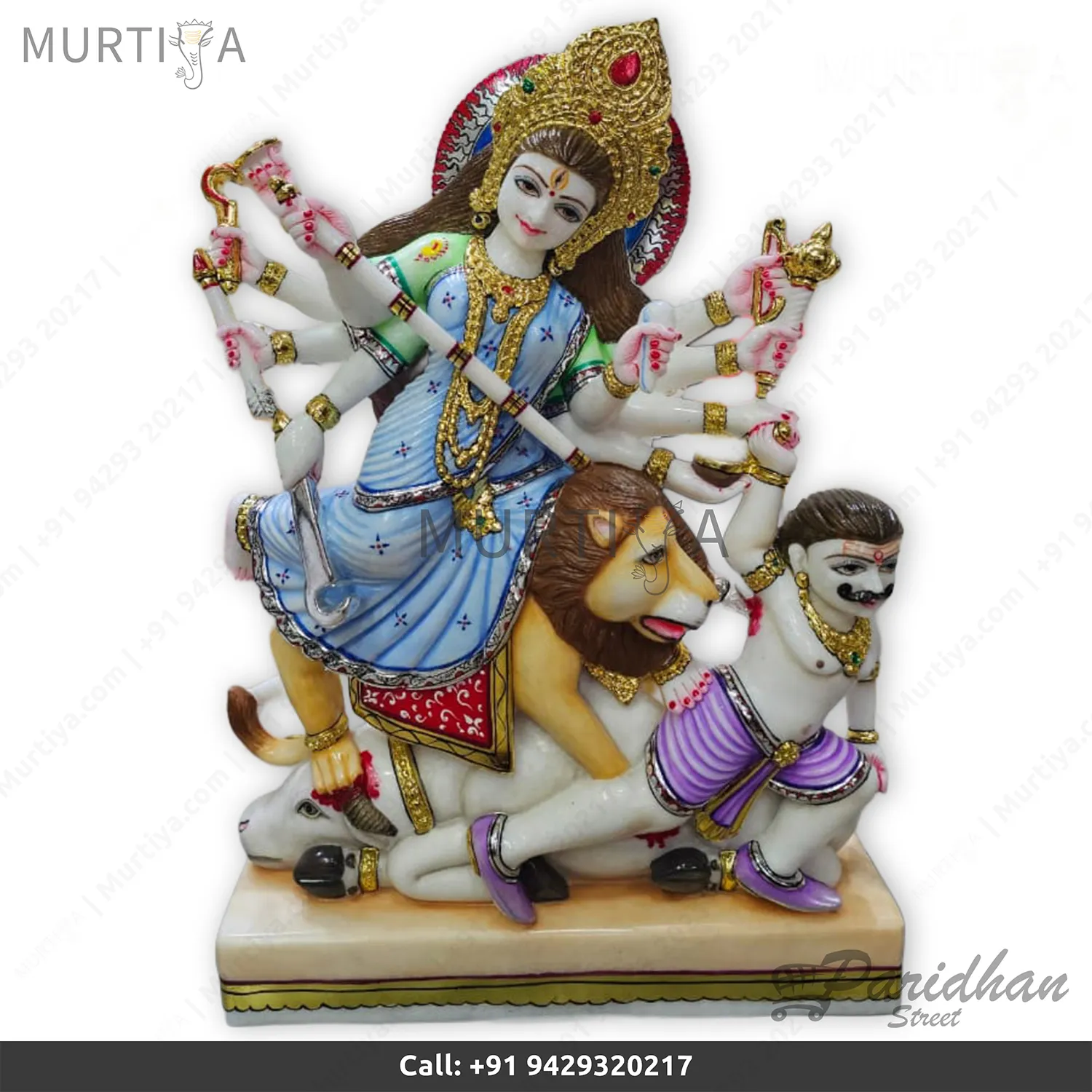
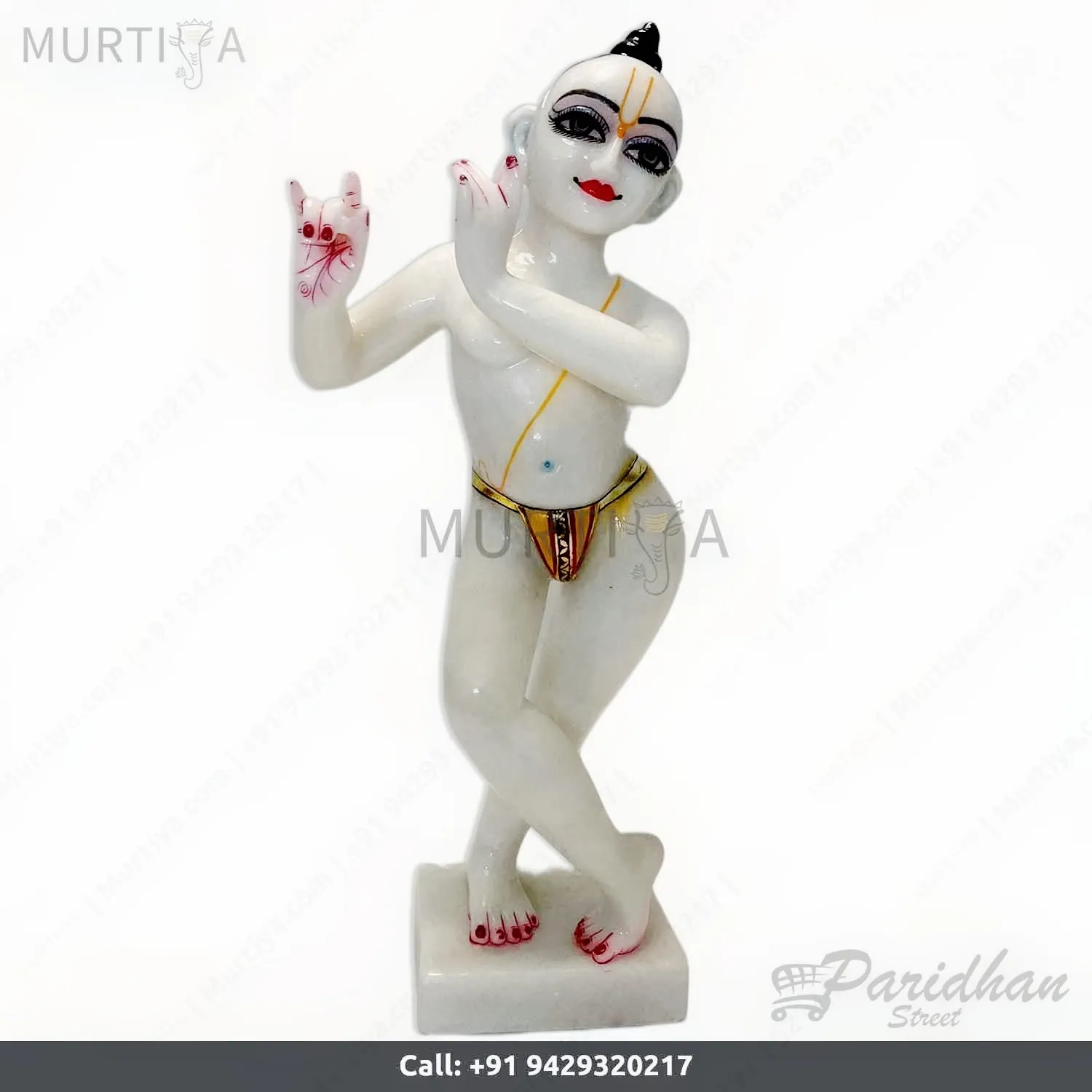
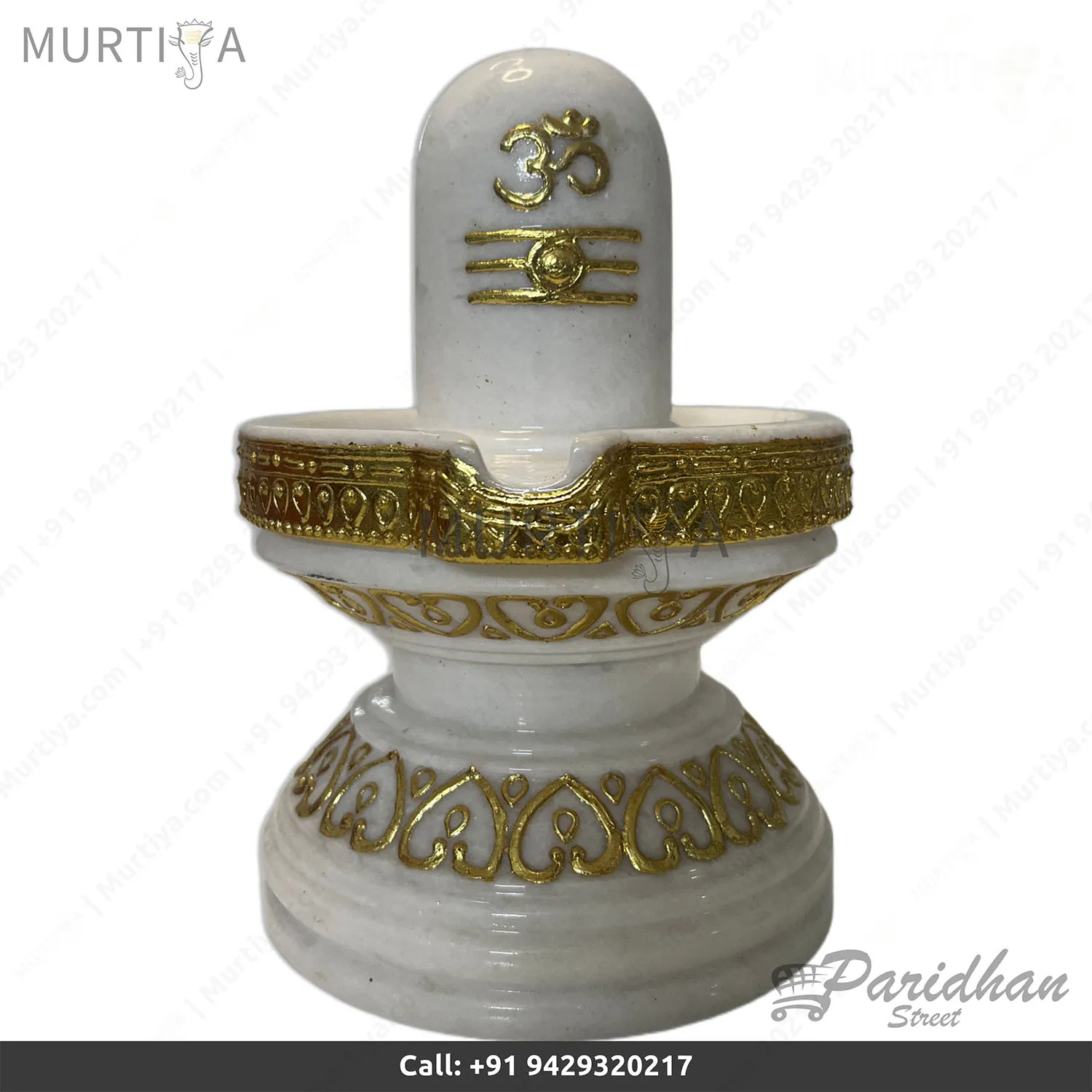
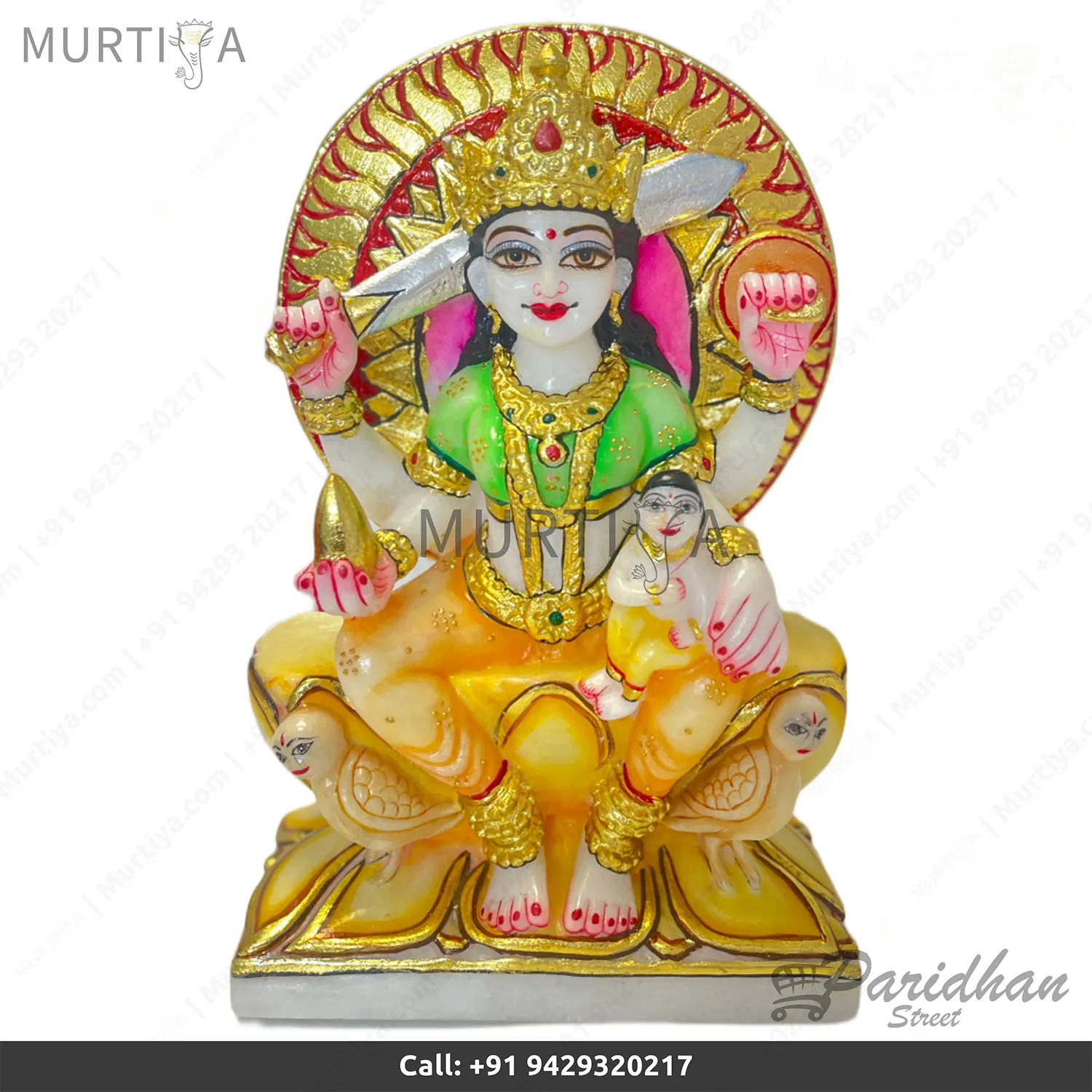
Both are traditional, both last, and both take daily worship well. The right choice depends mostly on size, weight and the look of your shrine.
Size and weight
Brass is cast, so it is ideal for small, detailed idols. Marble is carved, and while small murtis are available, the material really comes into its own at larger sizes. A large brass idol becomes very heavy and expensive; a large marble idol is more practical to produce.
Detail and finish
Brass captures fine, sharp detail and develops a warm patina over time. Marble captures soft detail beautifully and can be polished, left matte, or painted.
Care
Brass tarnishes and needs periodic polishing to stay bright; many families value the patina instead. Marble needs only dusting, plain water and avoidance of acidic cleaners. Neither is difficult, but they are different routines.
Daily abhishek
Marble handles repeated washing and milk or water offerings well. Brass also tolerates water but will change colour over time and may develop spots if left wet.
Which suits your shrine?
Small niche, traditional look: brass is often the better fit.
Large focal deity, permanent installation: marble.
Daily dressing and elaborate cloth: marble, because it holds cloth and jewellery without tipping.
Travel or festival portability: smaller brass or a compact marble murti.
Frequently asked questions
Does brass last longer than marble?
Both last for generations. Brass can be recoated or repolished; marble can be repolished too. Neither degrades in normal shrine use.
Is marble more expensive than brass?
Not necessarily. Small brass idols can be cheaper than small marble murtis, but at large sizes marble is usually far more practical and often better value.
Can I keep brass and marble idols together?
Yes. Many families keep a marble main deity with smaller brass figures. Vary the heights so the composition reads clearly.
Where to go next