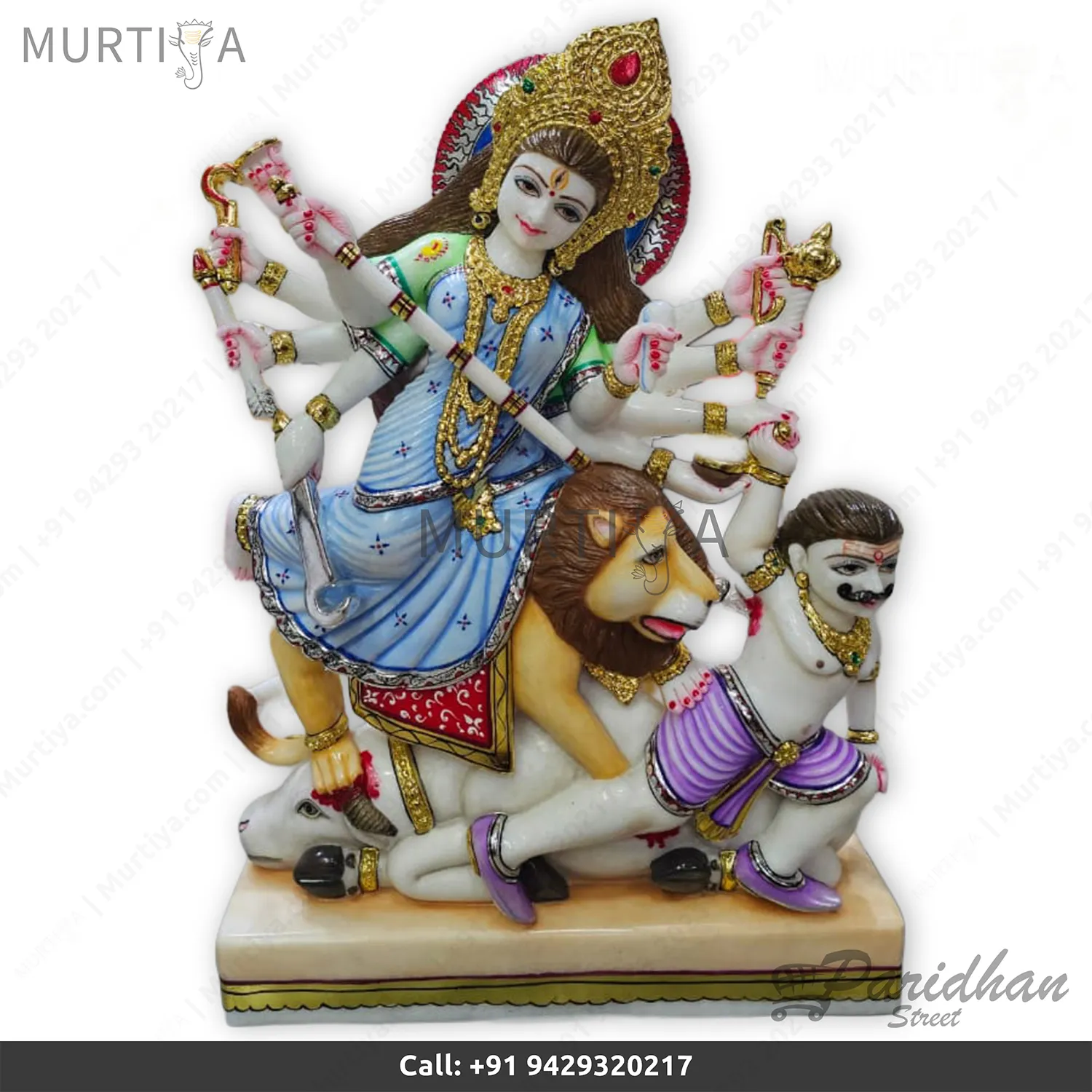
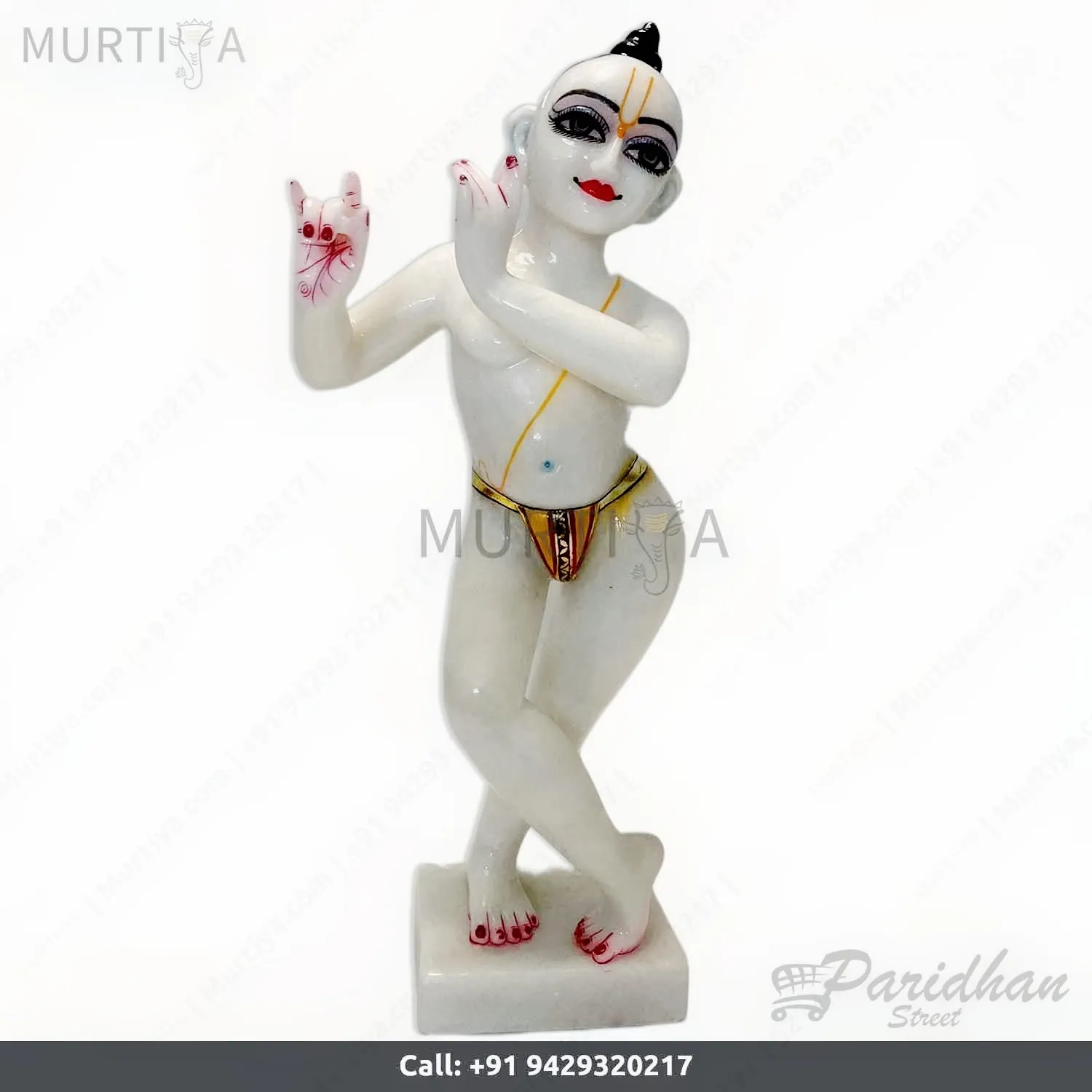
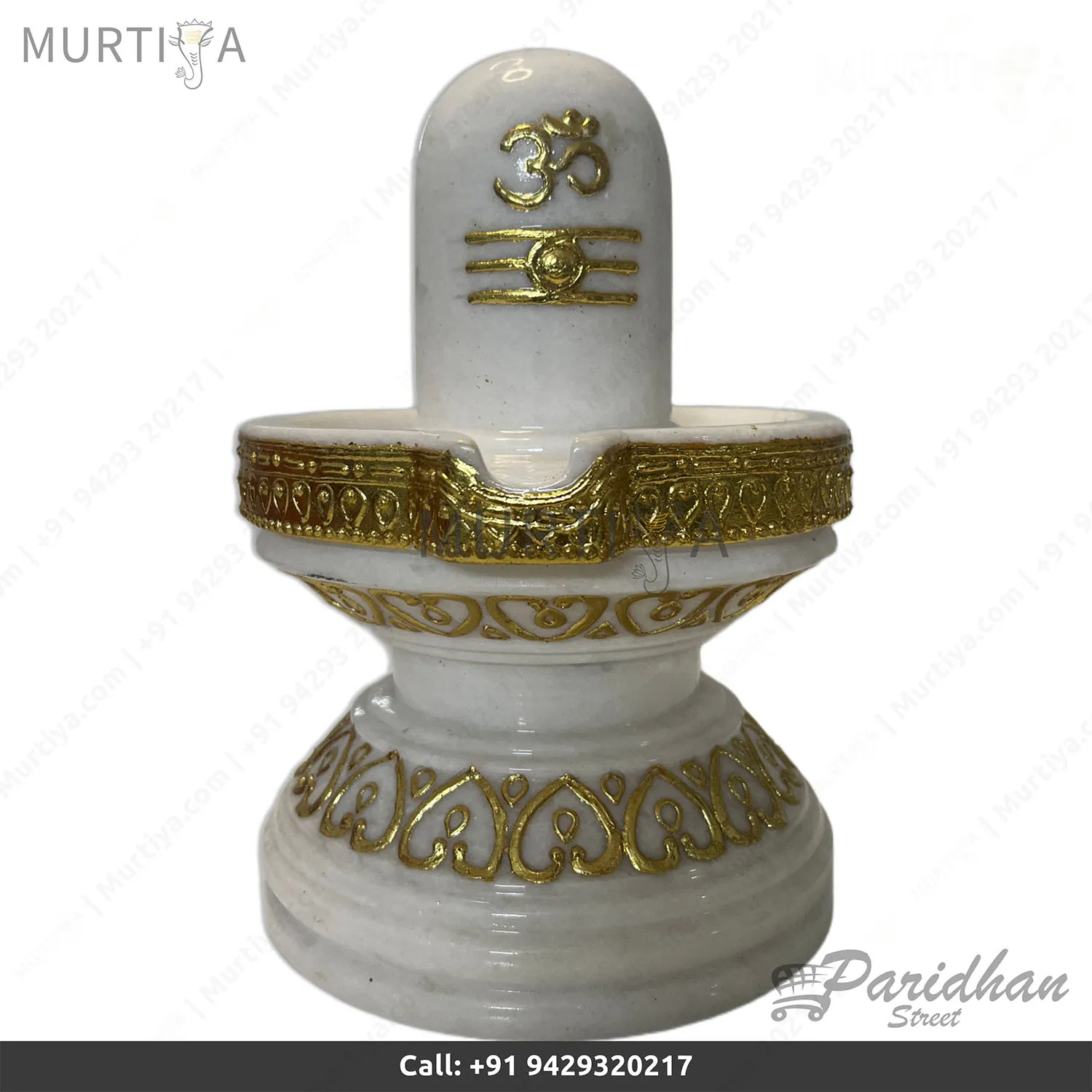
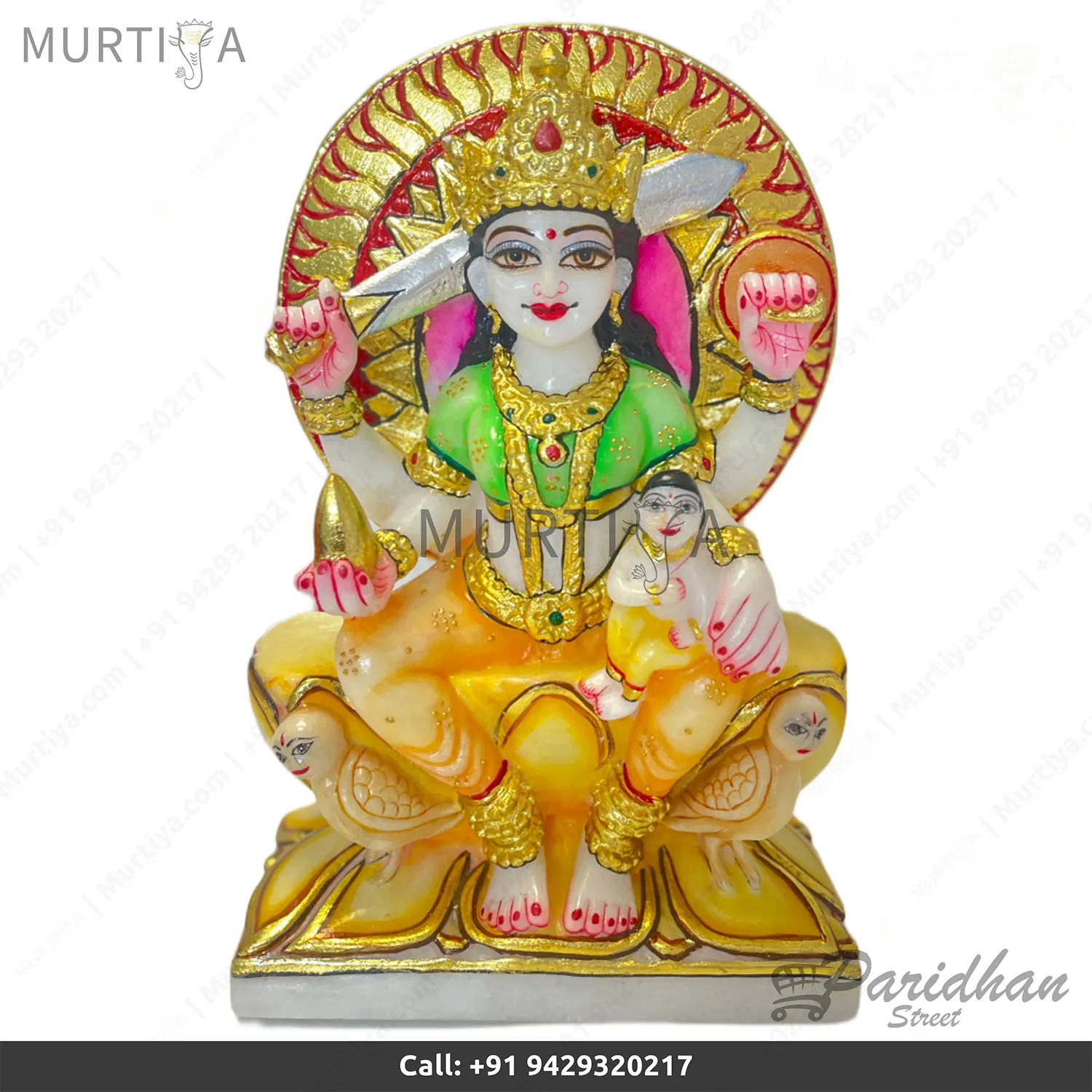
White marble became the default for deity carving for practical reasons as much as symbolic ones — and the two reinforce each other.
It reflects light onto the deity
White marble bounces light back onto the figure, so the carving reads clearly even in a dim mandir without strong lighting. Softer or darker stones absorb light and flatten the detail.
Purity and clarity as symbolism
In the devotional context, white is associated with purity and clarity. A plain white murti keeps the focus on the form of the deity rather than on decoration, which is why many traditions favour unpainted stone for the main idol.
It takes colour beautifully
Paradoxically, white marble is also the best base for colour. Because the stone is bright and smooth, cloth, jewellery and floral offerings read vividly against it, and painted finishes sit on a clean surface.
Durability for daily worship
Deities are bathed, dressed and adorned. Marble tolerates water, oil and sindoor with basic care, and can be repolished if it dulls. That practicality is the reason plain stone survives where painted plaster does not.
When another material makes sense
Brass and bronze are traditional in some regions and suit smaller shrines. Wood suits carved mandir panels. But for a large, permanently installed deity that receives daily worship, white marble remains the benchmark.
Frequently asked questions
Does a white marble murti need to stay unpainted?
No. White marble can be left plain or hand-painted. Many families prefer plain stone for the main deity and painted pieces for festival displays.
Is white marble compulsory for a home temple?
No. It is traditional and practical, but brass, wood and other materials are also used. Marble is favoured for larger, permanently placed idols.
Which white marble is most traditional?
Makrana marble from Rajasthan is the traditional benchmark for deity carving in northern India.
Where to go next